Listen, speak, repair and set boundaries with more intention

Social Skills Self-Assessment

Social skill is not being the loudest or most agreeable person in a room. Rate what you actually do across listening, clear expression, empathy, conflict repair and boundaries, then choose one behaviour to practise in a real conversation.

25questions
5social areas
FreePDF report
Want more than one result? Take the full free career assessment for your stage: 6 tests in one report →

Self-rating tool for reflection. It is not a clinical, hiring or selection test.

A student taking an online career assessment on a tablet
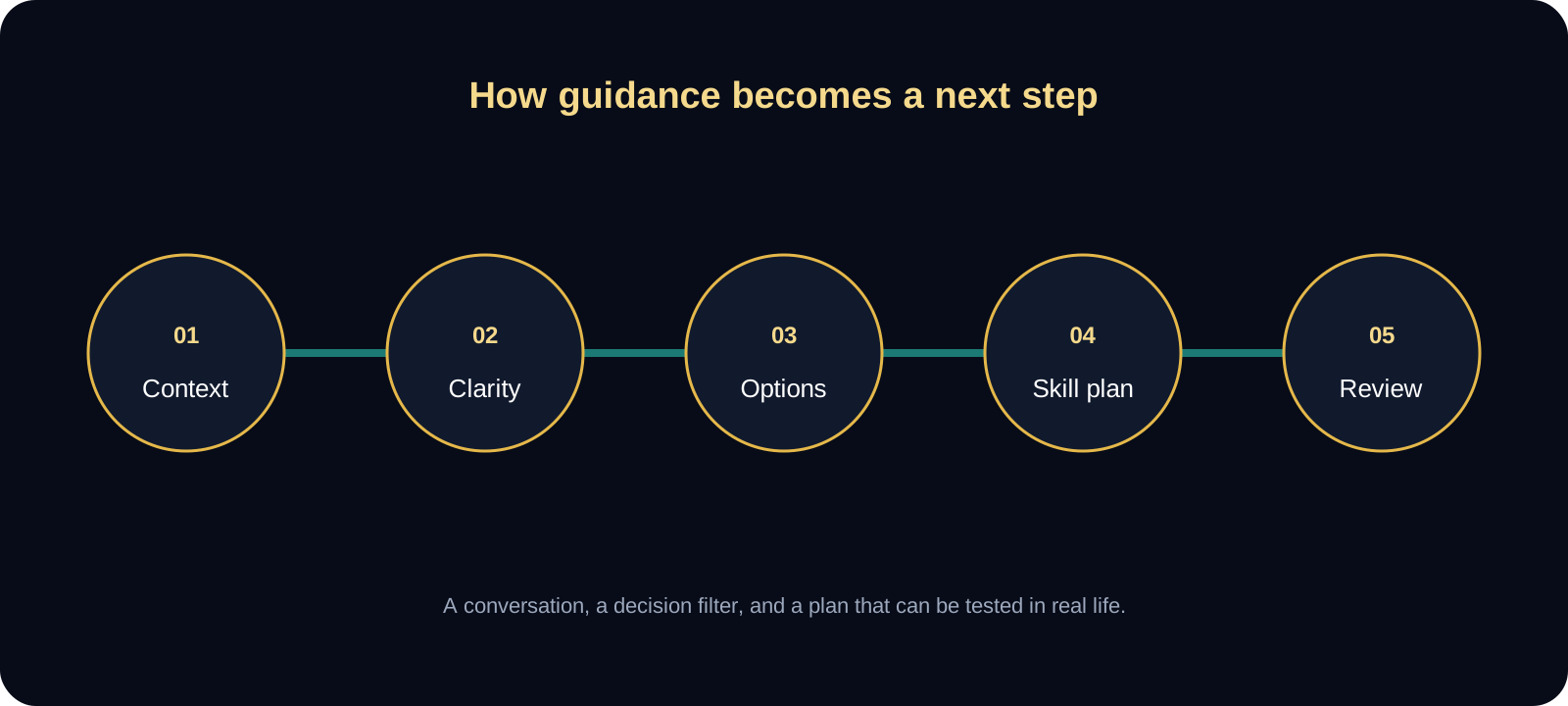
Five-stage career guidance session flow from context to review
A guidance session moves from context to clarity, options, a skill plan and review.
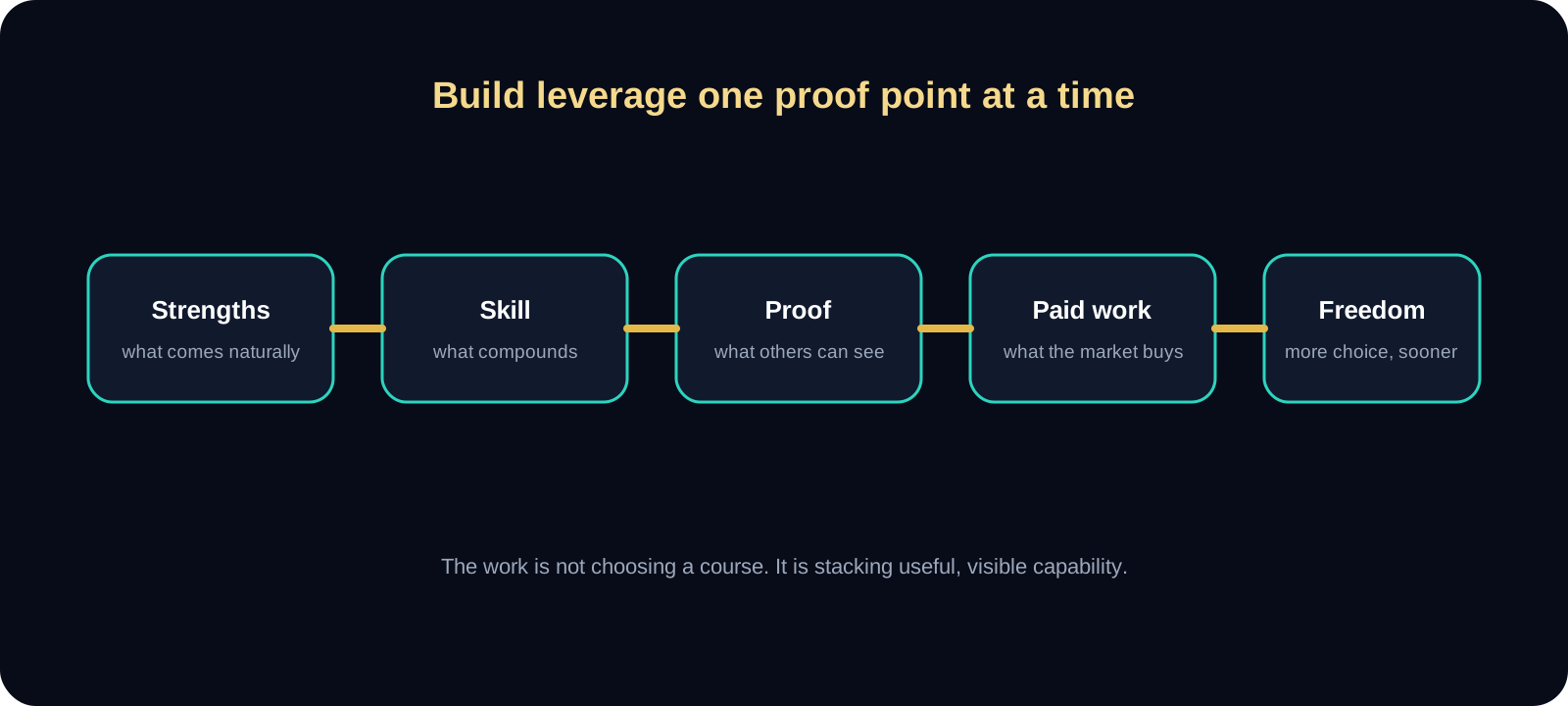
Skill portfolio chain from strengths to financial freedom
Strengths become skills, skills become visible proof, and proof leads to paid work and more freedom.
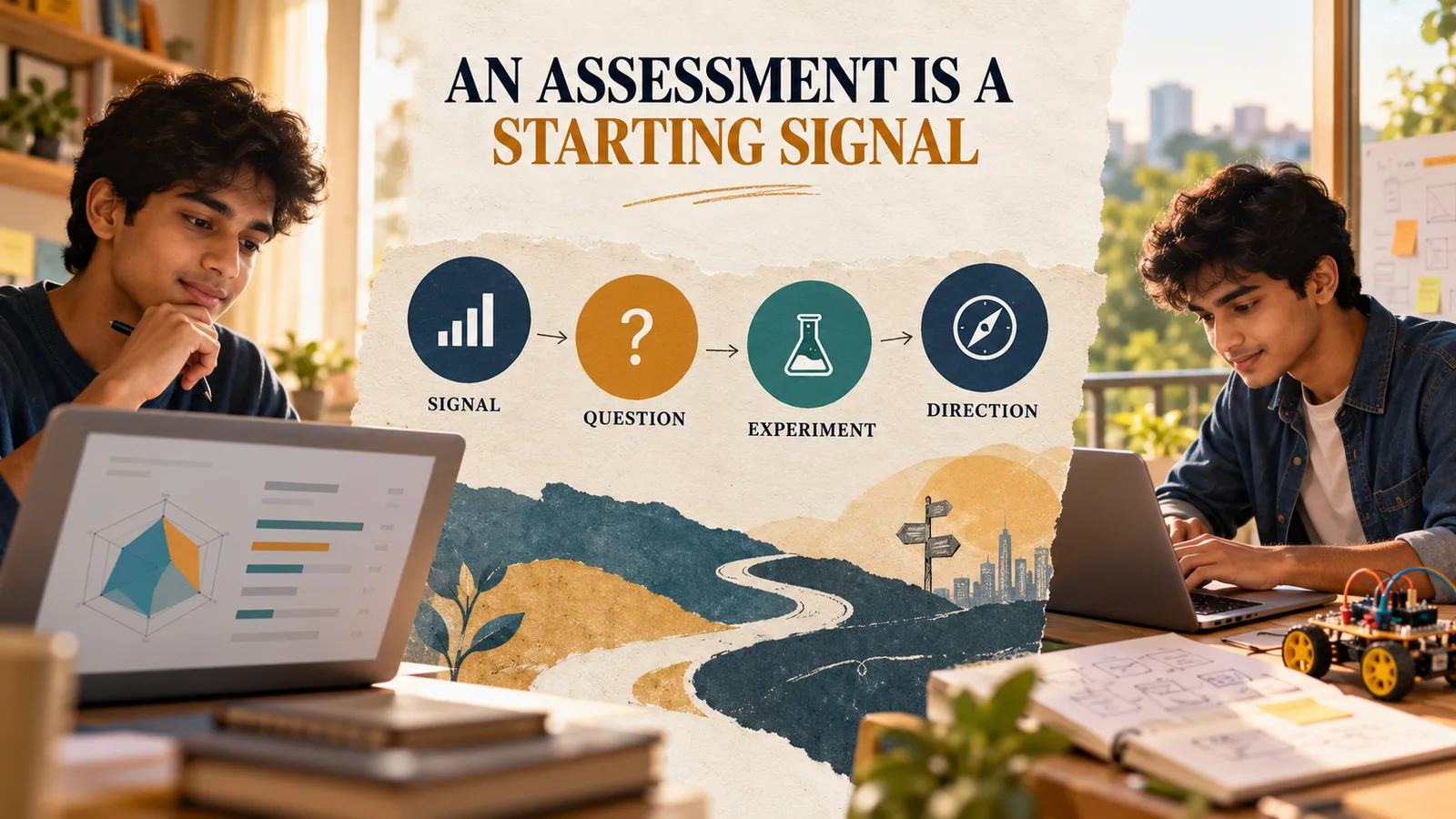
An assessment signal map showing how results become questions, experiments, and direction
Answer honestly

Rate each statement, then choose what you would do

There are no right answers on the statements, so think of your usual pattern, not your best day. In the situations, pick what you would really do, not what sounds best.

Where will you use these social skills first?

The same habit can look different with classmates, colleagues or family. Choose the setting that will make your next practice useful.

It appears at the top of your result and in your PDF report. It stays on your device.
What is scored

Five social-skill areas this assessment covers

Social skills are behaviours you can notice and practise. The result compares your own areas; it is not a norm, diagnosis or judgement of your worth.

Listening and understanding

Checking what another person means before responding

High score: You give people room to explain, check your understanding and notice what is not being said.

Low score: You reply before you understand, or assume another person means what you would have meant.

Clear and respectful expression

Saying what you mean without making the other person guess

High score: You make your point clearly while leaving room for a different view.

Low score: You hint, over-explain or become blunt when the conversation matters.

Perspective and empathy

Taking another person’s context seriously without losing your own boundaries

High score: You can recognise another person’s feeling or constraint without automatically agreeing with everything.

Low score: You dismiss a different reaction or absorb other people’s feelings until you cannot think clearly.

Repairing disagreement

Handling tension, feedback and misunderstandings

High score: You address a problem early, keep it about the situation and help the relationship recover.

Low score: You avoid the issue, become personal or treat one disagreement as proof the relationship is over.

Boundaries and reciprocity

Being supportive without saying yes to everything

High score: You can offer help, ask for help and say no or not yet without disappearing or over-apologising.

Low score: You agree resentfully, withdraw without explanation or expect others to read your limits.

How to use your social-skills result

Use the lowest area as a practice question

A lower score is not a permanent weakness. It is a prompt to notice one behaviour in a real conversation and try a different response.

If two areas are close, choose the one connected to a conversation you can have this week. Concrete practice teaches more than another label.

Social skill is not people-pleasing

Listening and empathy do not require agreement with everything another person says. Clear boundaries and respectful disagreement are part of a useful relationship.

This assessment is a self-rating. Ask someone you trust whether your example matches how they experience you.

Limits to keep in mind

  • This is a self-rating tool, so other people may experience your behaviour differently.
  • It is not a clinical, psychological, personality or communication-ability diagnosis.
  • Scores are not percentiles, pass marks or hiring predictions.
  • It cannot tell you whether a relationship is safe or whether another person will respond well.
  • Use the report to choose practice and conversation, not to label yourself or someone else.
Common questions

Before you take the test

What does this social skills test measure?

It asks about listening, clear expression, perspective and empathy, repairing disagreement, and boundaries and reciprocity. It shows how you describe your own habits.

Is this a personality test?

No. It is a self-rating of selected behaviours. Quiet and outgoing people can both practise social skill, and a score does not define a personality type.

How can I improve my social skills after the result?

Choose the lowest area, use its small practice in three real conversations, ask one person for specific feedback, and keep examples of what changed.

Is the social skills assessment free?

Yes. It is free, needs no sign-up and includes an instant result and downloadable report.

Can students and working professionals take it?

Yes. Choose the setting that matches where you want to practise first: student groups, a first job, or professional and career-change conversations.

Free results are step one

Free assessment results are useful. Real career decisions need stronger guidance.

Start with the free test that fits your stage. When the decision gets serious, move to updated career guidance that turns those signals into better choices, stronger skills, and higher leverage.

Use free results to narrow the problem before you commit to a bigger decision.

Use guidance to avoid wasted years, wasted money, and low-value skill choices.

Use the right plan for your stage to turn the result into a practical next step.

Sessions are online across India. The stronger plan gets built inside the guidance service.

Career Guidance Pricing

Students

Student path

Student Career Guidance

Practical student career guidance before the wrong path wastes years, money, and future readiness.

Limited-time student offer
₹3000
₹250
for the first 1-on-1 session

A low-friction first step before the wrong path costs more time and money.

Online across India

Avoid

Wrong streams, outdated degrees, and low-value skills that waste years and money.

Move toward

Useful skills, future readiness, and a clearer next decision.

Working Professionals

1-on-1

Working Professional Career Guidance

For professionals who need clearer pivots, stronger compensation, and higher-leverage career moves.

Limited-time professional offer
₹5000
₹3000
for one 1-on-1 session

Book one sharp 1-on-1 before stagnation, weak positioning, or a bad pivot gets more expensive.

Online across India

Avoid

Salary ceilings, random upskilling, weak positioning, and pivots that waste time and money.

Move toward

More useful skills, sharper positioning, and clearer next moves.