Five practical habits for handling everyday decisions

Life Skills Self-Assessment

Life skills are not a vague list of things a person should know. They are visible habits: managing yourself, handling everyday responsibilities, communicating clearly, checking information and acting safely online. Rate what you actually do and get a practical first routine for the area that needs attention.

25questions
5life-skill areas
FreePDF report
Want more than one result? Take the full free career assessment for your stage: 6 tests in one report →

Self-rating tool for reflection. It is not a clinical, hiring or selection test.

A student taking an online career assessment on a tablet
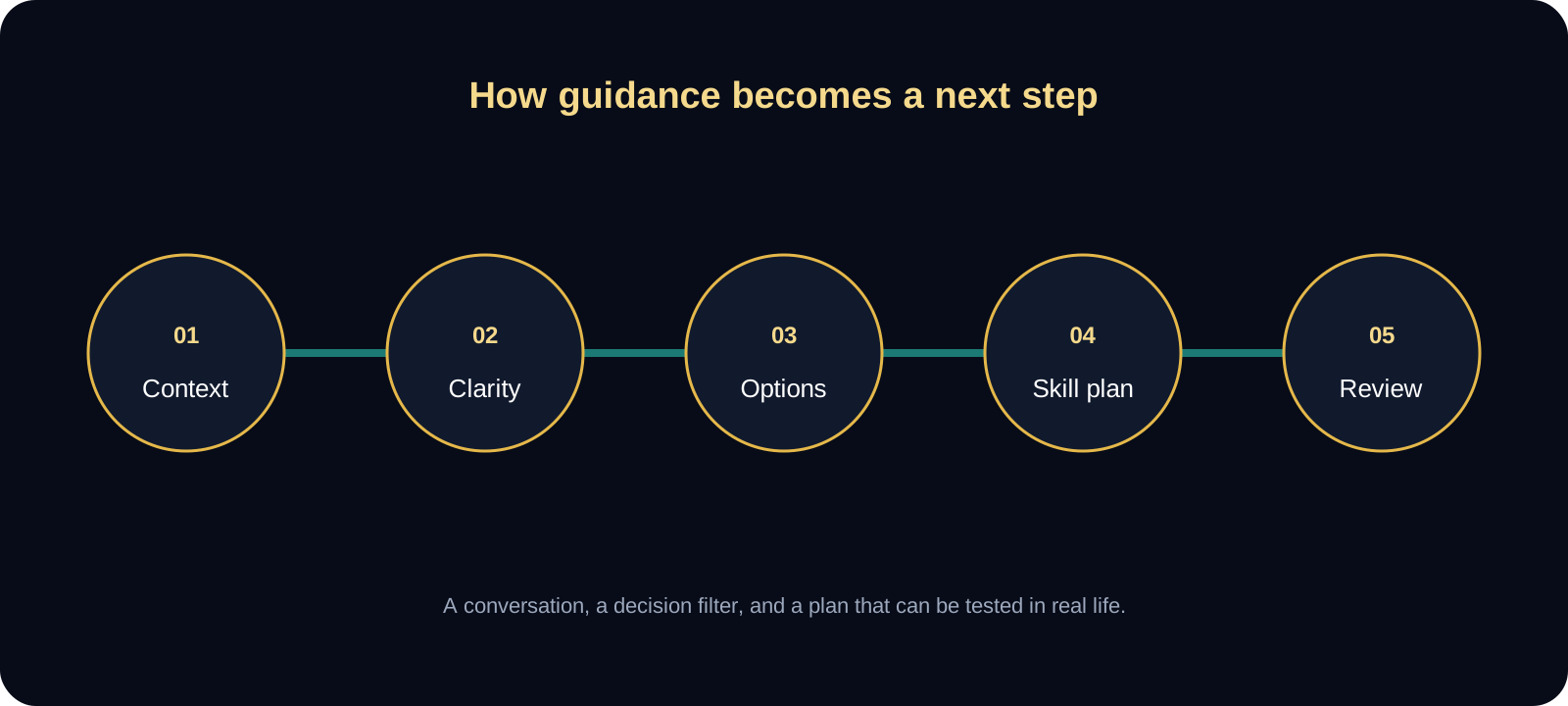
Five-stage career guidance session flow from context to review
A guidance session moves from context to clarity, options, a skill plan and review.
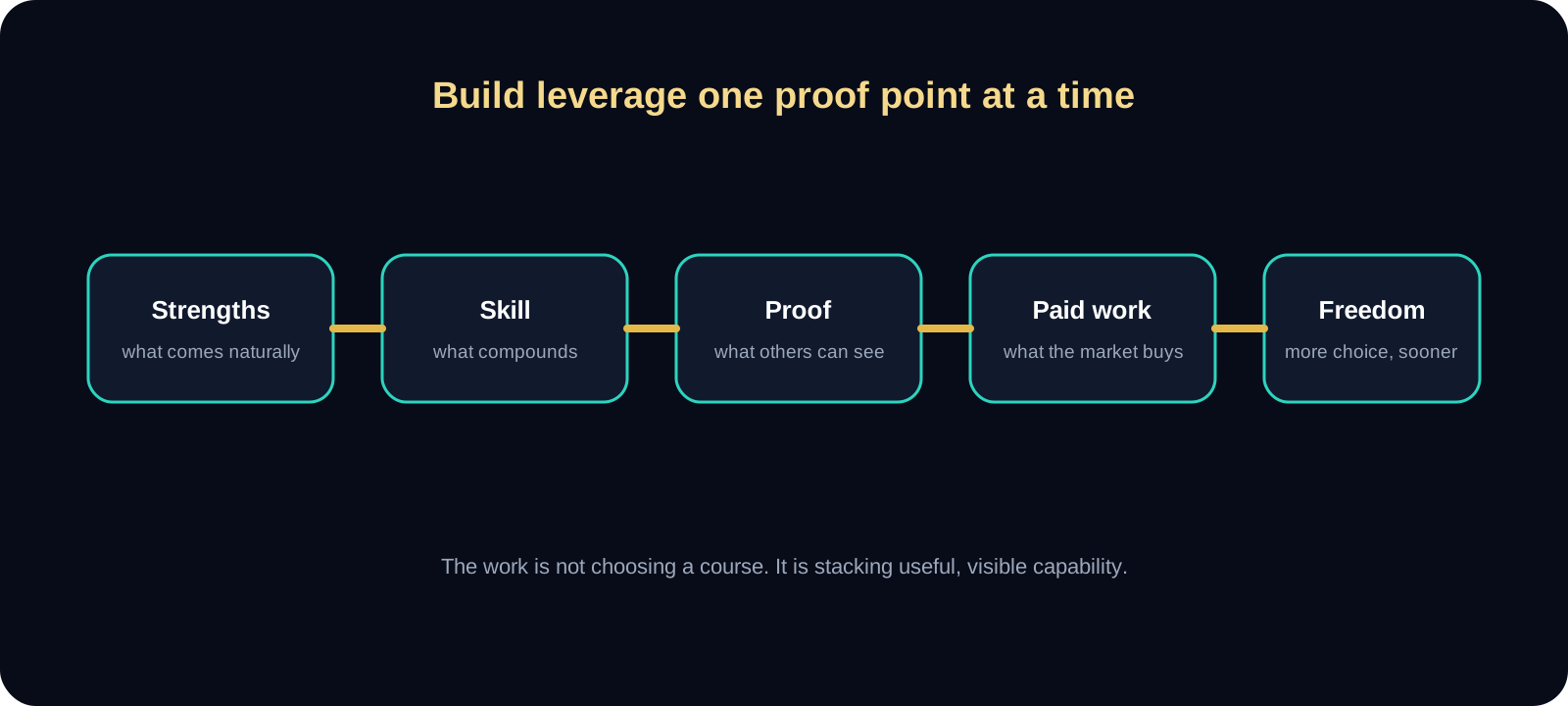
Skill portfolio chain from strengths to financial freedom
Strengths become skills, skills become visible proof, and proof leads to paid work and more freedom.
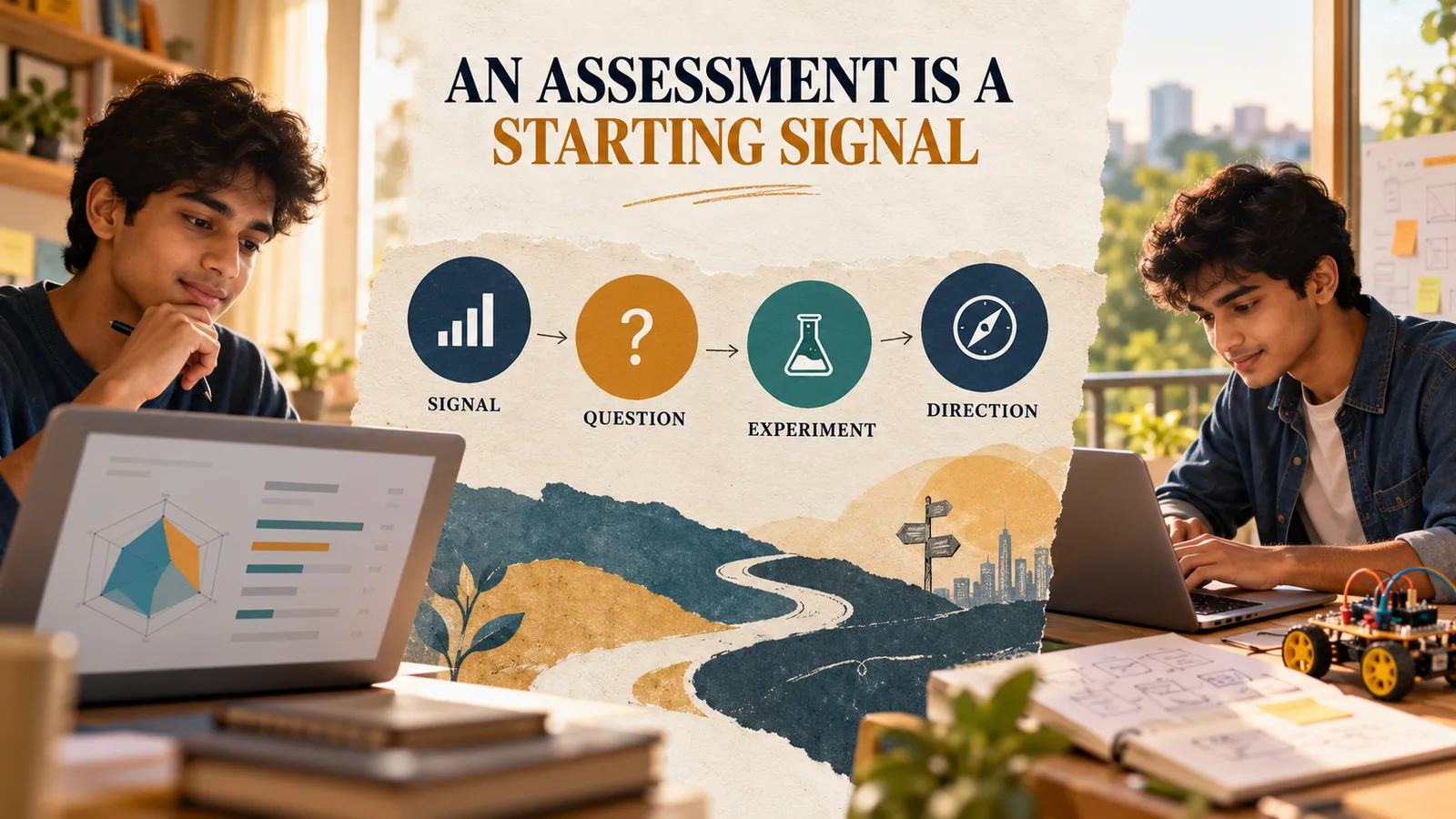
An assessment signal map showing how results become questions, experiments, and direction
Answer honestly

Rate each statement, then choose what you would do

There are no right answers on the statements, so think of your usual pattern, not your best day. In the situations, pick what you would really do, not what sounds best.

Which situation fits you best?

The same life skill looks different at school, in college and in adult work or family life, so the report adjusts its examples.

It appears at the top of your result and in your PDF report. It stays on your device.
What is scored

Five practical areas this self-assessment covers

The scores show how your own habits compare with one another. They do not compare you with other people and do not predict success, admission, income or wellbeing.

Self-management

Making choices, handling emotions and keeping yourself steady

High score: You notice what you need, pause before reacting and choose actions that protect your time, health and longer-term goals.

Low score: You react in the moment, lose track of what matters or let a difficult feeling decide what you do next.

Everyday organisation

Planning money, time, tasks and practical responsibilities

High score: You keep basic commitments visible, plan around limits and ask for help before a practical problem becomes urgent.

Low score: Dates, money or everyday tasks stay in your head until they become stressful, and you often solve them at the last minute.

People and boundaries

Communicating clearly, asking for help and saying no safely

High score: You listen, explain what you need, respect differences and set boundaries without turning every disagreement into a fight.

Low score: You avoid important conversations, agree when you mean no or expect people to understand needs you have not said aloud.

Problem solving and safety

Breaking problems down, checking information and choosing a safe next step

High score: You define the problem, check trustworthy information, compare options and know when a problem needs an adult or professional.

Low score: You jump to the first answer, trust forwarded advice without checking it or keep a problem private when help would make it safer.

Digital and civic judgement

Using information, technology and shared spaces responsibly

High score: You protect private information, pause before sharing, recognise uncertainty and contribute responsibly to groups and communities.

Low score: You share quickly, accept online claims without checking or forget that digital actions can affect your safety and other people.

How to read your life skills result

A lower score is a practice target, not a label

Life skills grow through repeated choices in ordinary situations. Start with the lowest area because a small change there may make other responsibilities easier, then retake the assessment after a few weeks.

Use real examples

Your answers describe how you see your habits. Check them against a dated example, a simple log or feedback from someone who knows you. A score becomes useful when it leads to a behaviour you can observe.

Know when a person should help

This tool cannot handle an emergency, a serious health concern, financial advice or a safety risk. Contact a trusted adult, qualified professional or appropriate local service when the situation needs more than general guidance.

Limits to keep in mind

  • This is an original self-rating tool for reflection, not a validated psychological, clinical, financial or safety assessment.
  • Scores come only from your answers and are not compared with other people. There is no pass mark.
  • It does not predict academic results, employability, income, relationships or future success.
  • Some questions concern sensitive situations. Skip the tool and ask a trusted person or qualified service for help if you are unsafe or in immediate danger.
Common questions

Before you take the test

What are life skills?

They are practical habits used in everyday decisions, such as managing yourself, organising responsibilities, communicating, solving problems and using digital information safely. This assessment turns those broad ideas into five areas you can practise.

Is this a life skills test for students?

Yes. School students, college students and adults can choose the stage that best matches their situation. The result stays a self-reflection tool rather than a judgement about maturity or ability.

What is a good life skills score?

There is no pass mark and no comparison group. Use the lowest area as the first practice target and keep a real example of what you did differently.

Is this a psychological or clinical assessment?

No. It is an original self-rating worksheet for everyday habits. It cannot diagnose a condition or replace qualified advice.

How can I improve my life skills?

Choose one lowest area, practise its 14-day routine, ask one trusted person for feedback and retake the assessment later. Small repeated actions are more useful than collecting another label.

Is the life skills assessment free?

Yes. It is free, needs no sign-up and provides an instant result with a downloadable PDF report.

Free results are step one

Free assessment results are useful. Real career decisions need stronger guidance.

Start with the free test that fits your stage. When the decision gets serious, move to updated career guidance that turns those signals into better choices, stronger skills, and higher leverage.

Use free results to narrow the problem before you commit to a bigger decision.

Use guidance to avoid wasted years, wasted money, and low-value skill choices.

Use the right plan for your stage to turn the result into a practical next step.

Sessions are online across India. The stronger plan gets built inside the guidance service.

Career Guidance Pricing

Students

Student path

Student Career Guidance

Practical student career guidance before the wrong path wastes years, money, and future readiness.

Limited-time student offer
₹3000
₹250
for the first 1-on-1 session

A low-friction first step before the wrong path costs more time and money.

Online across India

Avoid

Wrong streams, outdated degrees, and low-value skills that waste years and money.

Move toward

Useful skills, future readiness, and a clearer next decision.

Working Professionals

1-on-1

Working Professional Career Guidance

For professionals who need clearer pivots, stronger compensation, and higher-leverage career moves.

Limited-time professional offer
₹5000
₹3000
for one 1-on-1 session

Book one sharp 1-on-1 before stagnation, weak positioning, or a bad pivot gets more expensive.

Online across India

Avoid

Salary ceilings, random upskilling, weak positioning, and pivots that waste time and money.

Move toward

More useful skills, sharper positioning, and clearer next moves.