Work habits, digital basics, teamwork, learning and proof of work in one report

Employability Skills Assessment Test

This employability skills assessment test shows how job-ready you look today, from the point of view of a manager who has to trust you with real work. You rate yourself on work habits, digital basics, working with others, learning on the job and proof of work, then get one area to fix first. It is made for final-year students, freshers and early professionals in India, and it is a different check from a soft skills test.

41questions
5job-ready areas
FreePDF report
Want more than one result? Take the full free career assessment for your stage: 6 tests in one report →

Self-rating tool for reflection. It is not a clinical, hiring or selection test.

A student taking an online career assessment on a tablet
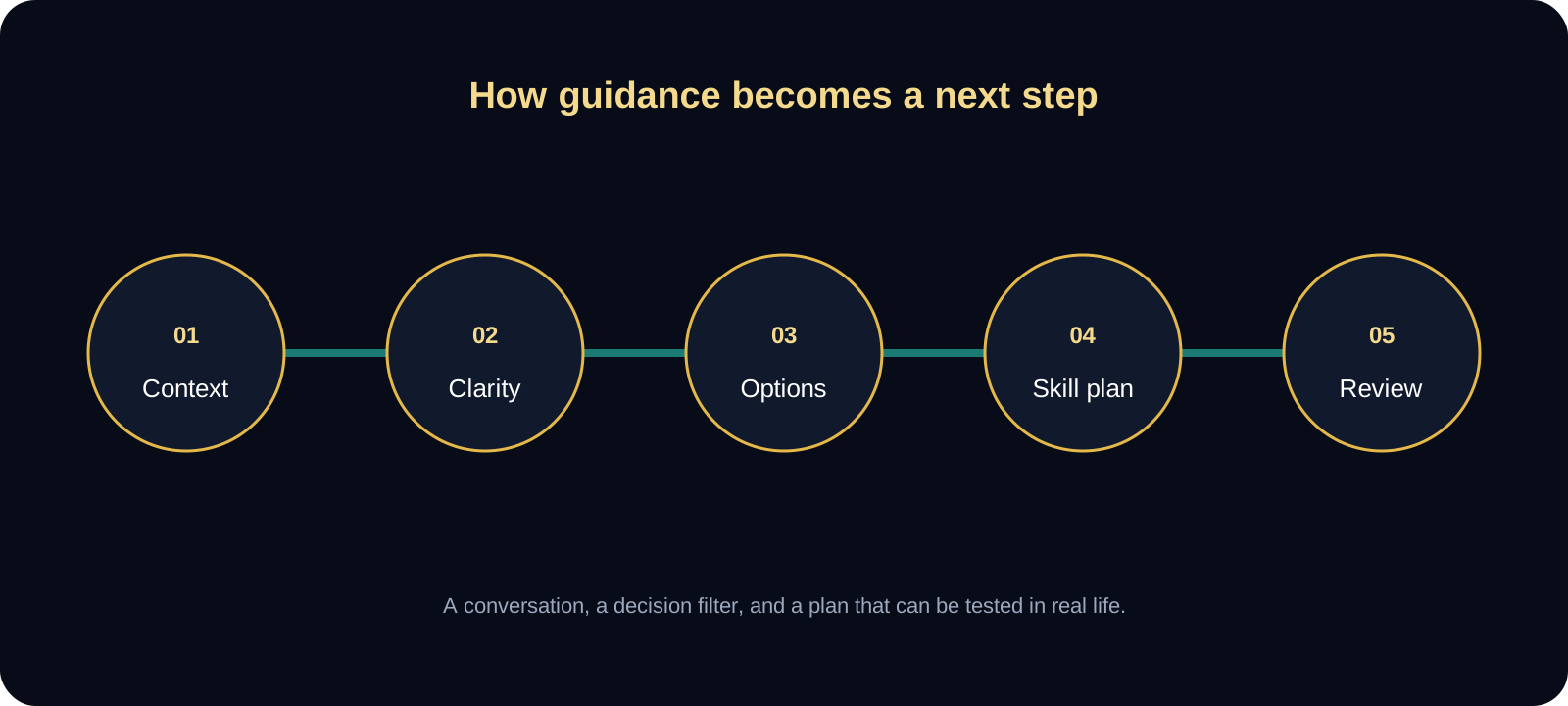
Five-stage career guidance session flow from context to review
A guidance session moves from context to clarity, options, a skill plan and review.
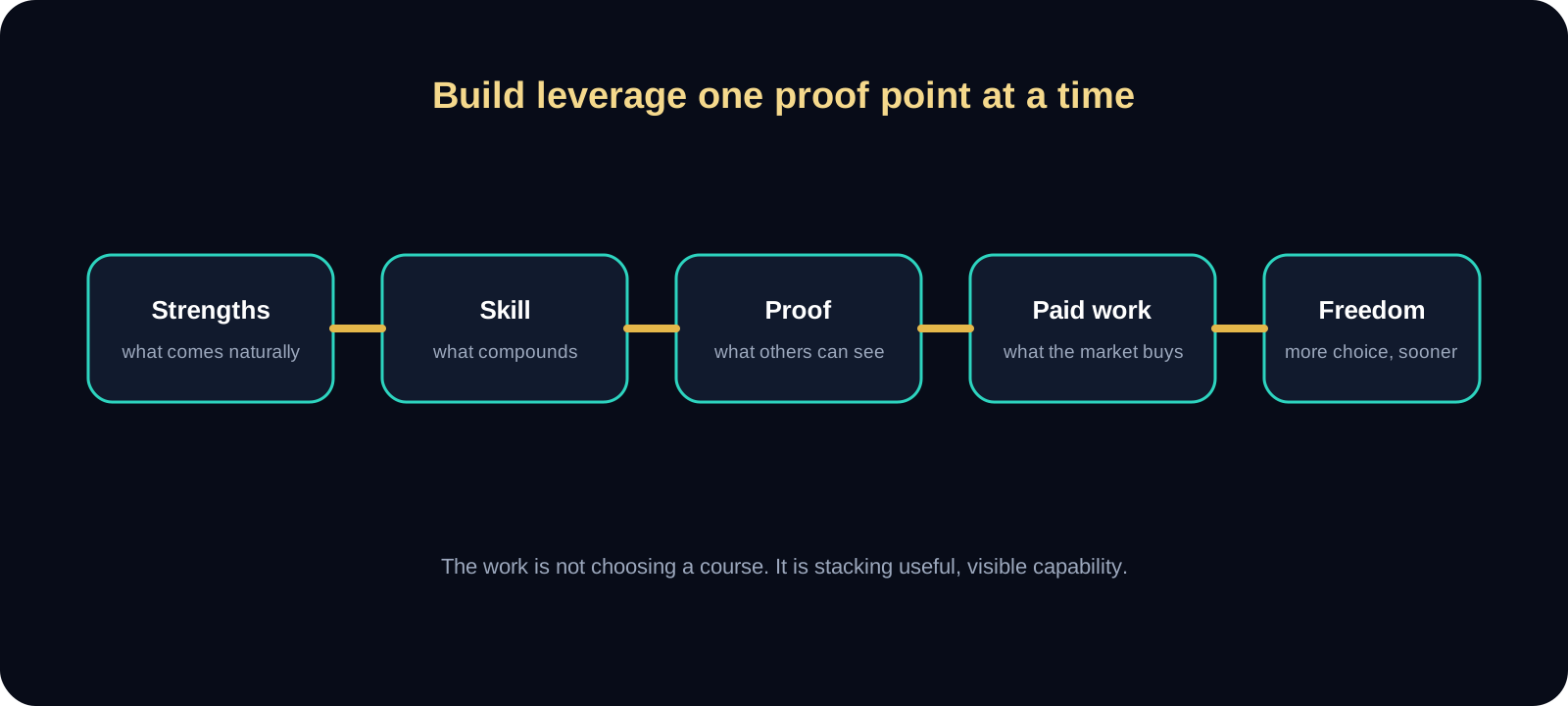
Skill portfolio chain from strengths to financial freedom
Strengths become skills, skills become visible proof, and proof leads to paid work and more freedom.
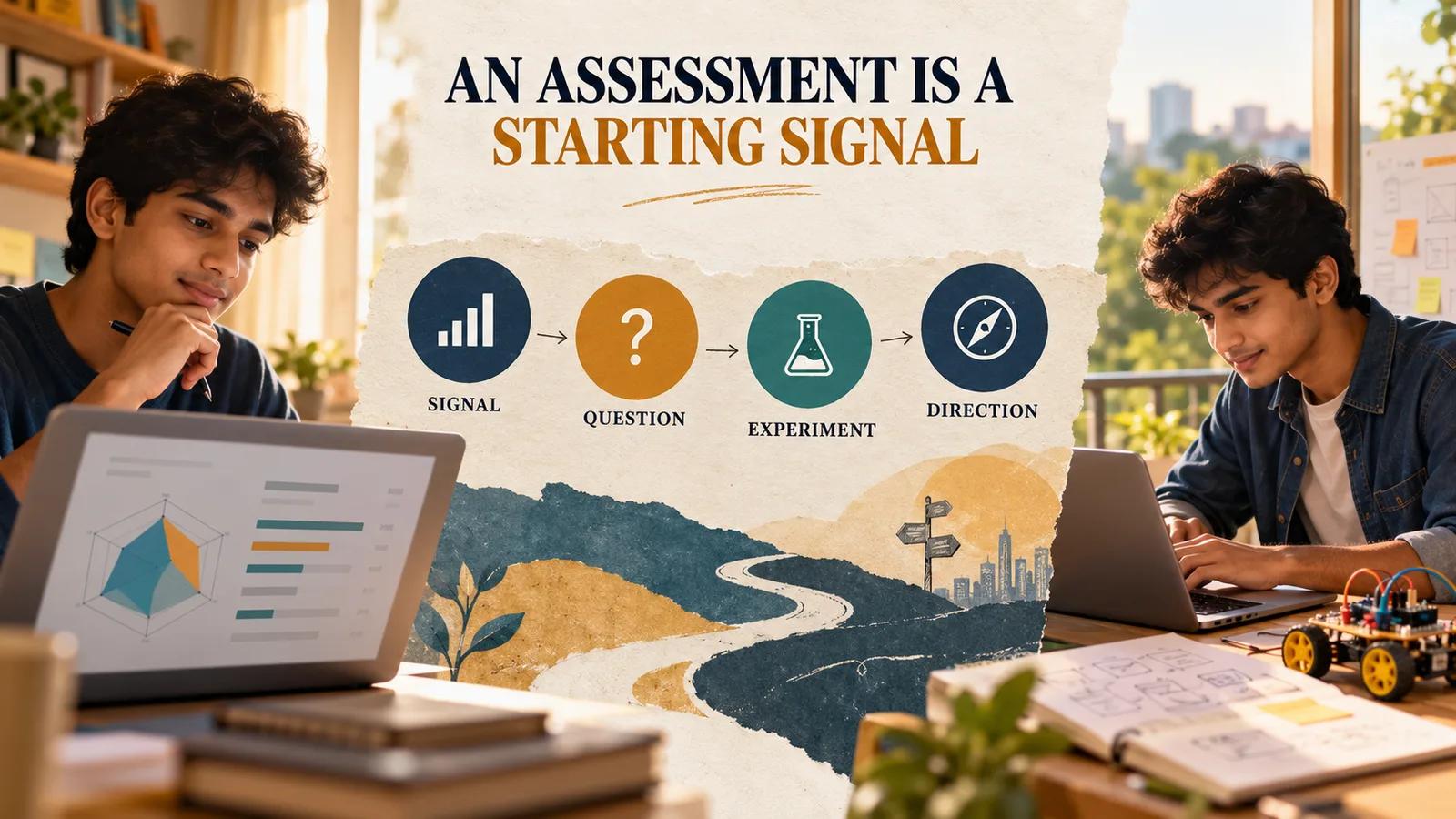
An assessment signal map showing how results become questions, experiments, and direction
Answer honestly

Rate each statement, then choose what you would do

There are no right answers on the statements, so think of your usual pattern, not your best day. In the situations, pick what you would really do, not what sounds best.

Which of these describes you best?

What counts as job-ready changes with where you are. Your report adds statements and advice that fit your stage.

It appears at the top of your result and in your PDF report. It stays on your device.
What is scored

Five areas that make you easier to hire and keep

A manager who takes on a new person is asking one question: can I give this person real work and expect it to come back right? These five areas cover the everyday signs of that. Begin with the lowest score, because a single gap can cancel out strengths in the other four.

Reliable work habits

Turning up, finishing what you promised and keeping people informed

High score: You are on time, you finish what you promise and you tell people early when a date or a plan changes.

Low score: Small slips, such as late replies, unclear updates or surprise delays, make people hesitate to hand you important work.

Digital basics for work

Sharing files, sheets and data at work in a way others can use

High score: You share files and sheets that others can open and trust, you name versions clearly and you protect work information.

Low score: Unclear file versions, sheets that others cannot use, or careless sharing of links and logins cost you time and trust.

Working with others

Handing over work, taking direction and asking for help at the right time

High score: You hand over work clearly, share credit, take direction well and ask for help early, with what you have already tried.

Low score: Others have to chase you, guess what you finished, or find out late that you were stuck.

Learning on the job

Picking up new tools and rules quickly and learning from mistakes

High score: You try new tools yourself first, learn from mistakes in writing and change something after feedback.

Low score: You wait to be taught, repeat the same mistakes or collect courses without using what you learn in real tasks.

Proof of work

Having real things you can show, not only claims on a resume

High score: You can open a project, report or sample in seconds, and your resume, profile and interview answers tell the same story.

Low score: Your resume lists skills and certificates, but you have little you can show that proves you used them.

How to read your employability result

This is about whether you can be trusted with real work

A soft skills test looks at how you deal with people, such as leading, adapting and solving problems. This one asks something plainer: if a manager gave you a task on Monday, would it come back on time, in a usable file, with a clear update?

Each area is a set of habits you can see from outside. That is why a low score is a to-do list and not a verdict on your ability.

Why proof of work gets its own score

Many students and freshers have similar degrees, courses and certificates. A person who can open one real project, sample or report in seconds gives the recruiter something concrete to judge.

The same signals matter if you plan to earn through freelance work or a small business. A first client wants to know who you have worked for, what you delivered and where they can see it.

What a good result can and cannot do

Strong habits remove avoidable reasons to pass you over, but they cannot create a vacancy or decide what a particular employer wants. Hiring depends on the role, the number of applicants and the person choosing, so no score here can promise an offer.

Use the result to decide what to build before your next application or in your first months at work.

Check the result against what others see

Your answers show how you see yourself. Ask a teacher, senior or manager to read your lowest-area statements and tell you which ones they have actually seen you do.

Retake the test after four weeks of practice and compare examples, not only scores. A saved email, a cleaned folder or a finished sample is better evidence than a higher number.

Limits to keep in mind

  • This test records how you rate yourself, so a teacher, senior or manager may describe your habits differently.
  • It is not a certificate, a licence or an official assessment, and no employer, board or university recognises the score as a qualification.
  • Nothing here is marked against other candidates, so there is no pass or fail. It cannot tell you whether you will be shortlisted, hired or promoted, or what you will earn.
  • It cannot measure technical or job-specific skills such as coding, accounting or machine operation. Those need a practical test or a trained assessor.
  • Use the report to choose what to practise and what to show, not to label yourself.
Common questions

Before you take the test

What is an employability skills assessment test?

It is a set of questions that shows how ready you are to be given real work. This employability skills assessment test looks at work habits, digital basics, working with others, learning on the job and proof of work, and gives each its own score.

Is this a skills test for employment that companies use for hiring?

No. Some employers run their own tests during hiring, and this is not one of them. It is a private self-rating for you, to find what to improve before you apply or while you settle into a job.

Is this the same as the soft skills self-assessment?

The soft skills test covers leadership, teamwork, adaptability, ownership and problem solving, which are about how you deal with people and change. This one asks how ready you are to be handed real work: following instructions, sharing files and sheets that others can use, handing over tasks, learning tools on the job and having proof to show. A habit such as reliability can appear in both, but here it is asked as work conduct, such as checking a task against its instructions or keeping work details private.

Can I use it as a workplace skills assessment or an employee skills assessment?

It is meant for your own use. A team lead could share it with a new joiner to talk through, but it is not built to rate employees, decide pay or replace a performance review.

Is this a competency skills assessment with a pass mark?

No. A formal competency assessment is marked by a trained assessor against set standards. Here you rate your own habits, and scores are not compared with anyone else, so there is no pass or fail.

How is the score worked out?

You rate each statement from 1 (not true) to 5 (very true). Statements that describe a weak habit, such as waiting until you are badly stuck before asking for help, are scored the other way round. Each situation option is worth 0 to 100 points, an area score averages everything asked about that area, and the overall score is the average of your five areas.

Which stage should I choose?

Choose student if you are in college or about to graduate, fresher if you are job hunting, interning or in your first year of work, and professional if you have worked for a few years or are changing fields. Each stage adds its own statements and advice.

Is the test free and how long does it take?

It costs nothing and asks for no sign-up, and the 41 questions take about 8 minutes. At the end you can read your result on screen or save it as a PDF.

Free results are step one

Free assessment results are useful. Real career decisions need stronger guidance.

Start with the free test that fits your stage. When the decision gets serious, move to updated career guidance that turns those signals into better choices, stronger skills, and higher leverage.

Use free results to narrow the problem before you commit to a bigger decision.

Use guidance to avoid wasted years, wasted money, and low-value skill choices.

Use the right plan for your stage to turn the result into a practical next step.

Sessions are online across India. The stronger plan gets built inside the guidance service.

Career Guidance Pricing

Students

Student path

Student Career Guidance

Practical student career guidance before the wrong path wastes years, money, and future readiness.

Limited-time student offer
₹3000
₹250
for the first 1-on-1 session

A low-friction first step before the wrong path costs more time and money.

Online across India

Avoid

Wrong streams, outdated degrees, and low-value skills that waste years and money.

Move toward

Useful skills, future readiness, and a clearer next decision.

Working Professionals

1-on-1

Working Professional Career Guidance

For professionals who need clearer pivots, stronger compensation, and higher-leverage career moves.

Limited-time professional offer
₹5000
₹3000
for one 1-on-1 session

Book one sharp 1-on-1 before stagnation, weak positioning, or a bad pivot gets more expensive.

Online across India

Avoid

Salary ceilings, random upskilling, weak positioning, and pivots that waste time and money.

Move toward

More useful skills, sharper positioning, and clearer next moves.