For college students, fresh graduates, diploma and non-engineering streams

Internship Readiness Self-Assessment

Applying for an internship with a copied resume, no clear goal and no idea how to behave on the first day is a common way to waste a good chance. This free self-assessment checks five areas, knowing what you want, proof of your skills, finding and applying, workplace habits, and learning fast, then shows which one to fix first before you apply.

40questions
5readiness areas
FreePDF report
Want more than one result? Take the full free career assessment for your stage: 6 tests in one report →

Self-rating tool for reflection. It is not a clinical, hiring or selection test.

A student taking an online career assessment on a tablet
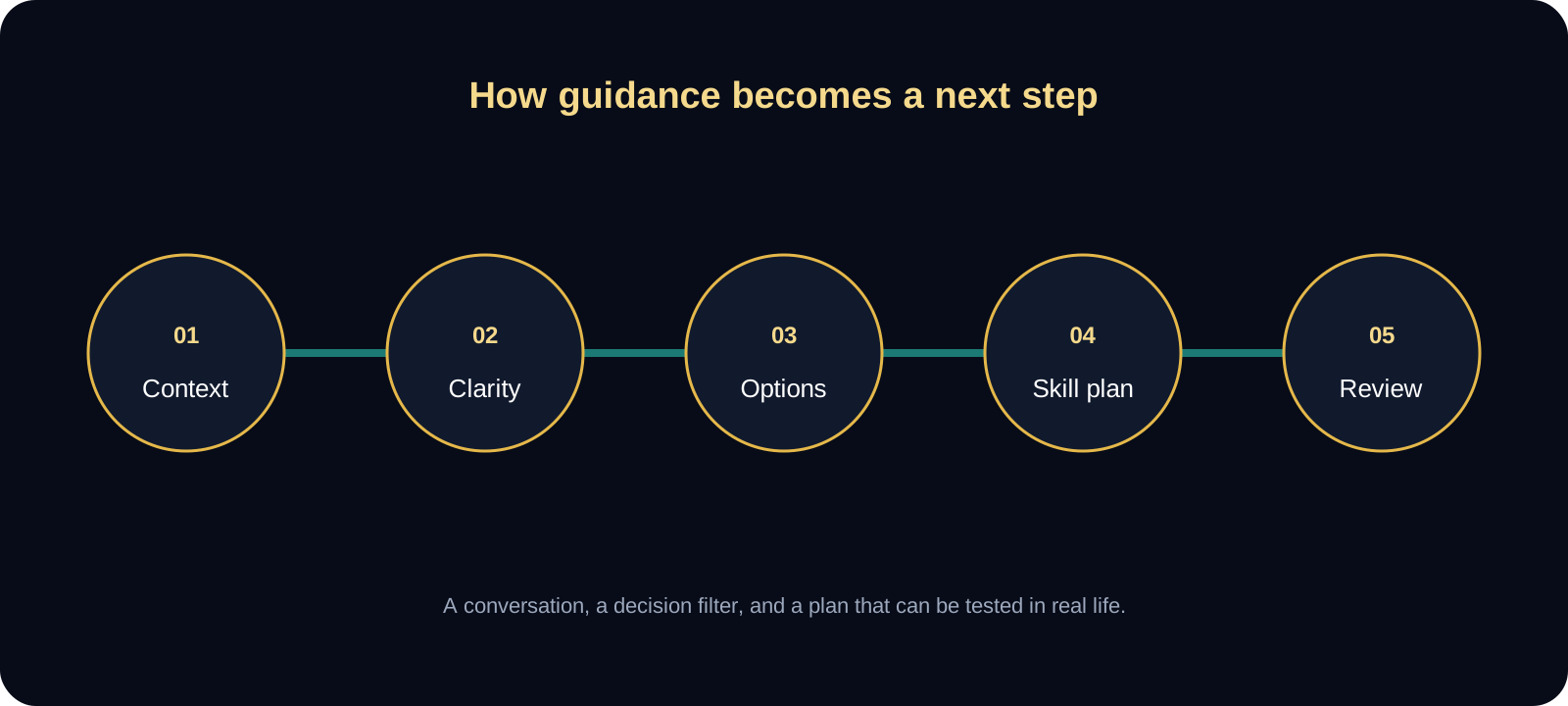
Five-stage career guidance session flow from context to review
A guidance session moves from context to clarity, options, a skill plan and review.
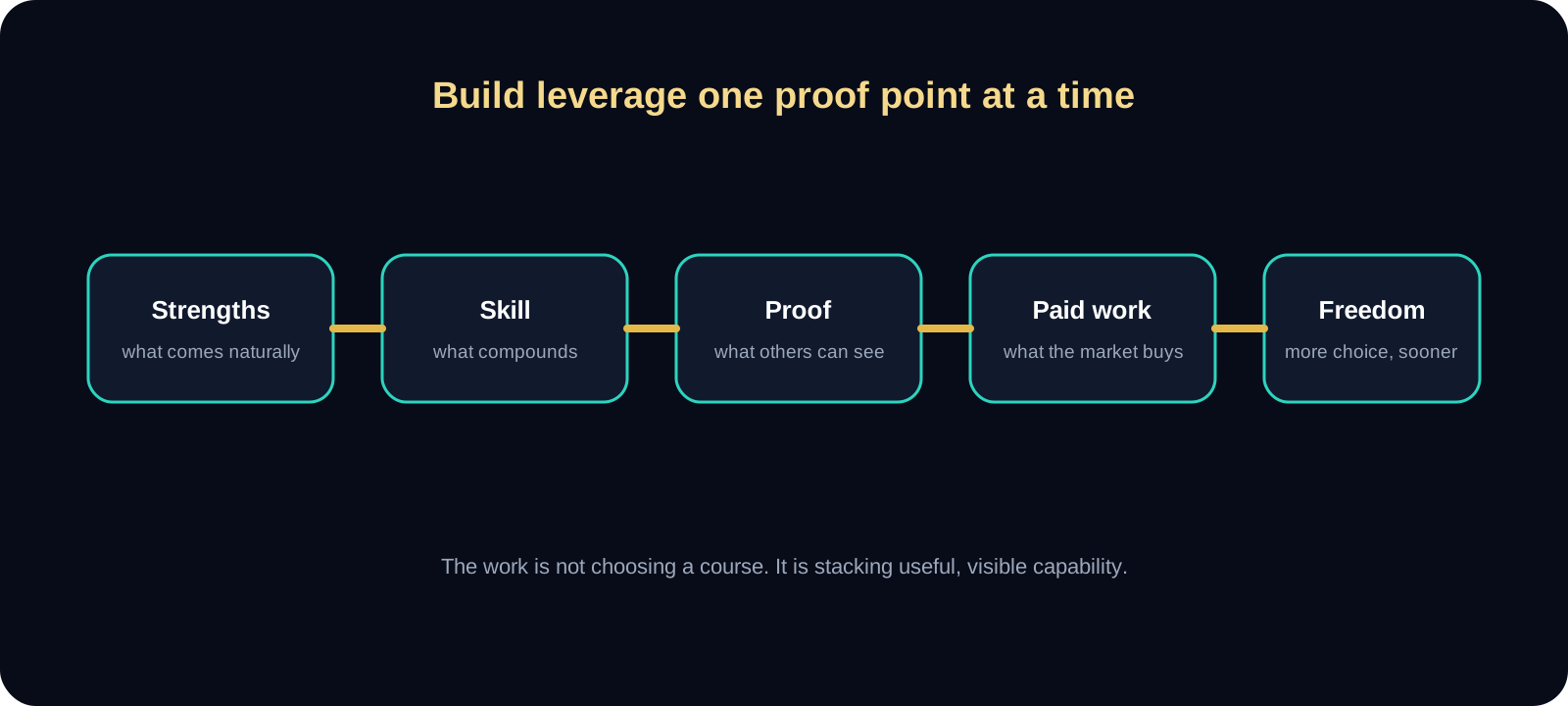
Skill portfolio chain from strengths to financial freedom
Strengths become skills, skills become visible proof, and proof leads to paid work and more freedom.
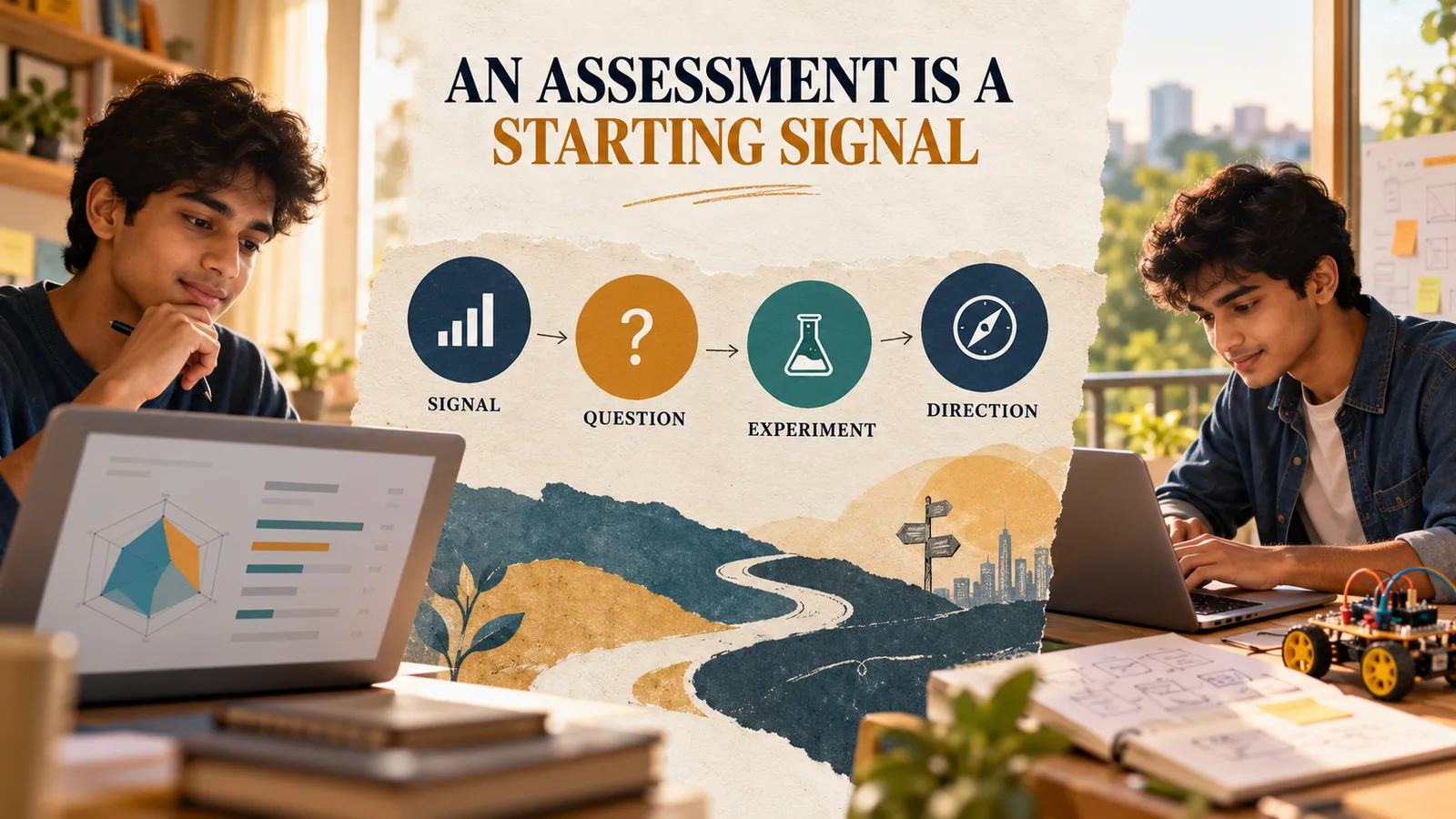
An assessment signal map showing how results become questions, experiments, and direction
Answer honestly

Rate each statement, then choose what you would do

There are no right answers on the statements, so think of your usual pattern, not your best day. In the situations, pick what you would really do, not what sounds best.

Which of these describes where you are now?

A first-year student, a final-year student, a graduate and a diploma or non-engineering student face different internship questions, so your report adjusts the advice to match.

It appears at the top of your result and in your PDF report. It stays on your device.
What is scored

Five internship readiness areas this self-assessment covers

An internship goes well or badly long before the first day. These five areas cover what you decide, what you can show, how you find and apply, how you behave once you are there, and how much you take away.

Knowing what you want from an internship

A clear reason, field and practical limits

High score: You know what you want to learn or test, which fields interest you and what hours, location and duration you can manage, so you choose on purpose.

Low score: You want an internship mainly because others have one or a certificate is needed, and you are not sure what you would do or what you want from it.

Resume, portfolio and skills proof

Something real to show, even with no experience

High score: Your resume is your own, every line can be explained, and you can show a file, project or activity that proves what you say you can do.

Low score: Your resume is a template with your name, you have nothing to show beyond marks, and you could not explain some lines if asked.

Finding and applying

Looking in the right places and following up

High score: You know where genuine internships are listed, you tailor each application, keep track and check that an offer is real before you accept.

Low score: You depend on one portal or one friend, send the same message everywhere, lose track of applications or are unsure how to tell a real offer from a fake one.

Workplace habits and professionalism

Time, communication, privacy and taking feedback

High score: You are on time, reply promptly, warn early about problems, respect privacy and take feedback calmly, so people are happy to give you more work.

Low score: You are unsure about workplace rules, go silent when stuck or late, or find feedback hard to take, and small habits could cost you the support you need.

Learning fast and getting value

Asking, noting, taking more work and leaving with proof

High score: You ask specific questions, record what you learn, ask for more work and finish with feedback, a reference and work you can show.

Low score: You wait to be told what to do, ask only when badly stuck or finish the internship with nothing to show beyond a certificate.

How to read your internship readiness result

Readiness is a set of habits, not a degree or a grade

Each statement describes something you do or can show, such as keeping a list of applications or noting what you learned each day. That makes readiness something you can build. A lower score means a step you have not practised yet, not a lack of ability.

Why these five areas

An internship has a before, a during and an after. Knowing what you want and having proof come before. Finding and applying is the move itself. Workplace habits and learning are what happens during, and they decide what you take away afterwards.

A first-year student may score low on proof simply because there is little to show yet. A final-year student may need more on applying and conduct. A diploma, ITI, BBA, BCom or BA student may find that proof and search need a different style, such as a work sample, a reference from a teacher or a local business contact, not a code repository.

Look at the lowest area, then at the gap between areas

The overall score is only a rough summary. The more useful reading is the lowest area, because one weak area can waste strength elsewhere. A strong resume with poor workplace habits, or good habits with no way to find openings, still leaves you stuck.

Fees, fake offers and paid or unpaid internships

Some internships pay a stipend and some do not. This differs by organisation, field and rules, and a stipend alone does not make an internship good. What matters more is the work you will do, the person who supervises you and what you receive at the end.

Be very careful with any offer that asks you to pay to be given a place, to send ID or bank details to a personal number, or to decide in a hurry. Genuine employers do not normally charge for work experience. A paid training course is a different thing, so judge it as a course and ask a teacher or your placement cell before paying anything. Never share an OTP with anyone.

Turn scores into steps, not worry

Pick your lowest area and follow its 14-day routine. Retake the test after a few weeks and compare it with your own earlier result. If a score does not move, look at the statements you rated lowest and fix those first.

Limits to keep in mind

  • This is a self-rating tool and shows how you describe your own preparation. It does not replace advice from a teacher, a placement officer or someone who works in the field you are considering.
  • It is not an employer test and does not predict whether any organisation will offer you an internship or a job.
  • Scores are not compared with other people, so there is no pass mark. A high score does not mean you are ready for every internship, and a low score does not mean you are not.
  • It cannot tell you whether a particular offer is genuine. Check each one yourself through the organisation's official website, a written offer and a teacher or placement officer before you share documents or pay anything.
  • Internship rules differ between colleges, universities, boards and employers. Check your own course guidelines and the official offer letter, as they come first.
Common questions

Before you take the test

Is this internship readiness test free?

Yes. You can take it without paying and without signing up, see your result on screen and download the report as a PDF.

How do I know if I am ready for an internship?

Readiness has five parts: knowing what you want, having proof of your skills, finding and applying well, workplace habits and learning fast. This test rates each part so you can see which are ready and which need work before you apply.

What is a good score on this test?

There is no pass mark. Scores are only against your own answers, not against other people. Use the area scores to decide what to work on first, and retake the test after a few weeks to see what changed.

How is the score worked out?

Statements are rated from 1 to 5 and the ones worded in the negative are reversed. In the situation questions, each option carries a score from 0 to 100. Each area score is the average of its statements and situations, shown out of 100, and the overall score is the average of the five areas.

Can first-year students and non-engineering students use this internship self-assessment?

Yes. You choose whether you are in the first or second year, in the final year, a graduate looking for first experience, or in a diploma, ITI, BBA, BCom, BA or other non-engineering stream. The extra questions and advice change with your choice, and the examples are not limited to IT.

Do I need experience or a portfolio before I apply?

No. Internships are a way to gain experience, so you are not expected to have much yet. What helps is a clear reason, an honest resume and one small thing you have made or done. The test shows how to build that proof with what you already have.

How is this different from the interview readiness test?

The interview readiness test is about the interview itself: research, examples, answers and follow-up. This one is wider and starts earlier: choosing what you want, building proof, finding genuine openings and then behaving and learning well during the internship. Taking both covers the whole path.

How can I tell if an internship offer is fake or asks for a fee?

Treat any request to pay for a place, to send ID or bank details to a personal number, or to decide in a hurry as a warning. Look up the organisation on its own website, ask for the offer in writing from an official email address and show it to a teacher or your placement cell. Paid training courses exist, but a course is not the same as an internship, so judge it as a course before paying.

Are internships paid or unpaid?

It depends on the organisation, the field and the rules of your course, so some pay a stipend and some do not. Ask before you start whether there is a stipend, and also ask about hours, the supervisor and what you will receive at the end. An unpaid internship can be worth doing if the learning is real, but never pay money to take one.

How often should I take it?

Every few weeks is enough. Take it once now, follow the 14-day routine for your lowest area, and retake it before you apply or when you start your internship. Your own earlier result is the only fair comparison.

Free results are step one

Free assessment results are useful. Real career decisions need stronger guidance.

Start with the free test that fits your stage. When the decision gets serious, move to updated career guidance that turns those signals into better choices, stronger skills, and higher leverage.

Use free results to narrow the problem before you commit to a bigger decision.

Use guidance to avoid wasted years, wasted money, and low-value skill choices.

Use the right plan for your stage to turn the result into a practical next step.

Sessions are online across India. The stronger plan gets built inside the guidance service.

Career Guidance Pricing

Students

Student path

Student Career Guidance

Practical student career guidance before the wrong path wastes years, money, and future readiness.

Limited-time student offer
₹3000
₹250
for the first 1-on-1 session

A low-friction first step before the wrong path costs more time and money.

Online across India

Avoid

Wrong streams, outdated degrees, and low-value skills that waste years and money.

Move toward

Useful skills, future readiness, and a clearer next decision.

Working Professionals

1-on-1

Working Professional Career Guidance

For professionals who need clearer pivots, stronger compensation, and higher-leverage career moves.

Limited-time professional offer
₹5000
₹3000
for one 1-on-1 session

Book one sharp 1-on-1 before stagnation, weak positioning, or a bad pivot gets more expensive.

Online across India

Avoid

Salary ceilings, random upskilling, weak positioning, and pivots that waste time and money.

Move toward

More useful skills, sharper positioning, and clearer next moves.