Clarity, accuracy, tone, editing and work writing in one report

Writing Skills Assessment Test

This free writing skills assessment test shows which part of your writing needs work first: clarity, accuracy, tone, editing or writing for work. You rate what you really do when you write an answer, an email or a resume line, and you choose the best move in real situations. It is a self-rating, not a graded grammar exam, and it works for students, freshers and working professionals.

41questions
5writing areas
FreePDF report
Want more than one result? Take the full free career assessment for your stage: 6 tests in one report →

Self-rating tool for reflection. It is not a clinical, hiring or selection test.

A student taking an online career assessment on a tablet
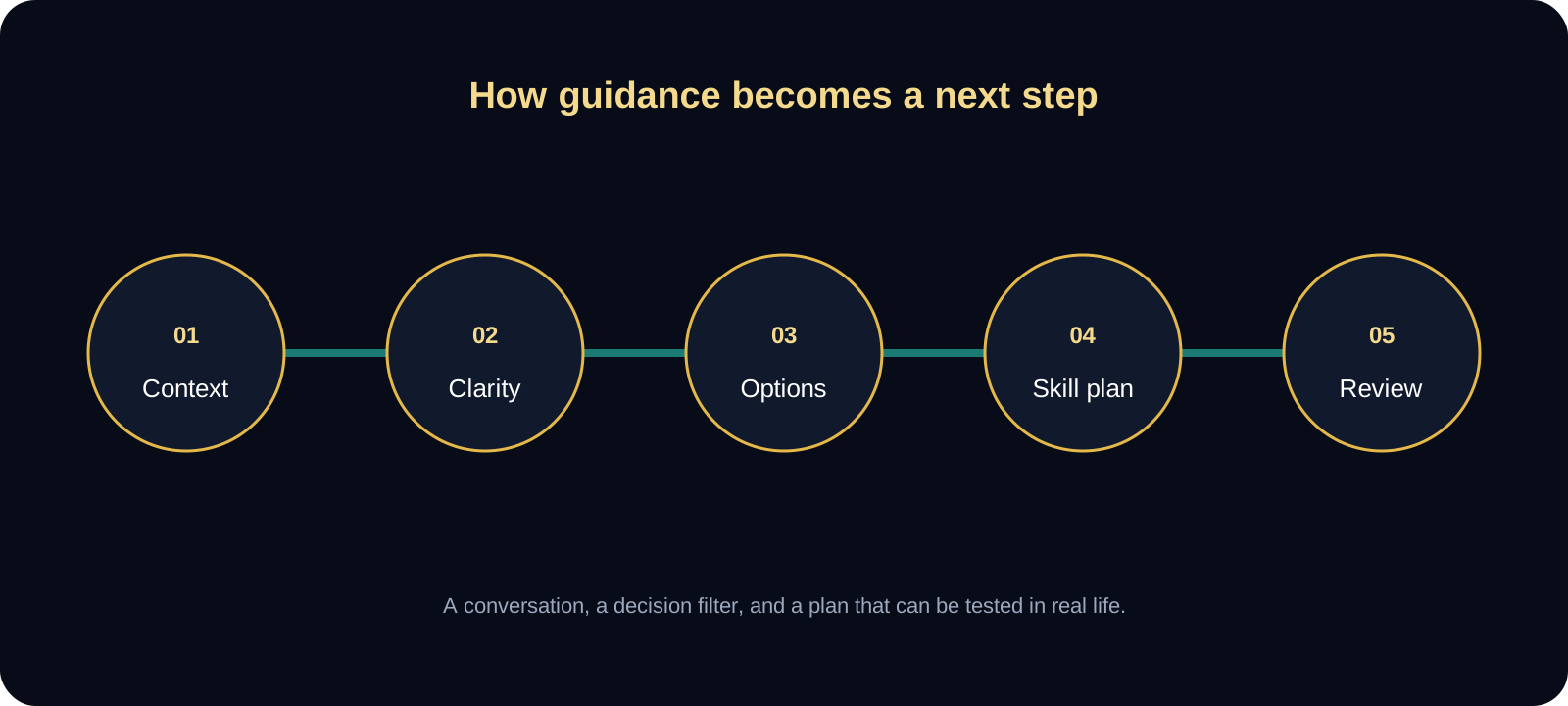
Five-stage career guidance session flow from context to review
A guidance session moves from context to clarity, options, a skill plan and review.
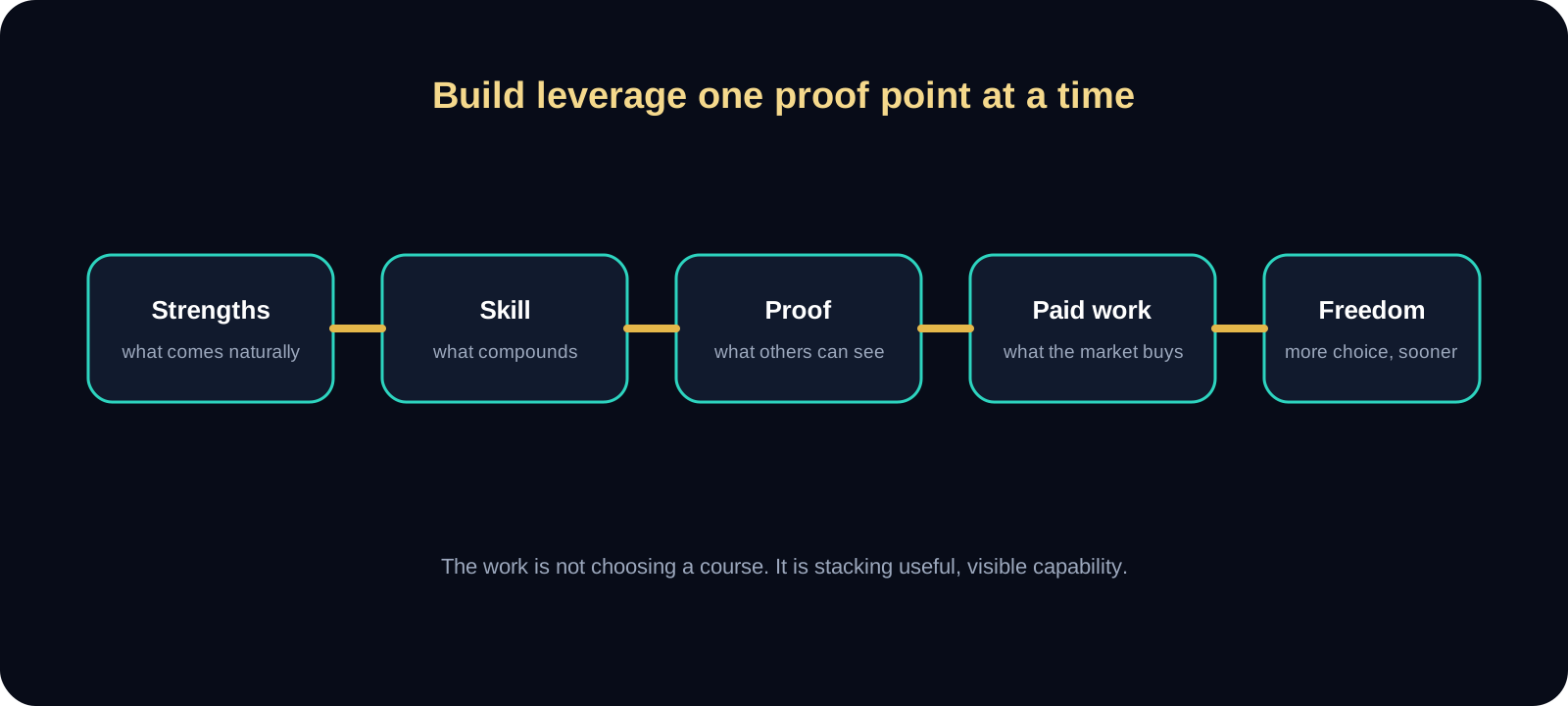
Skill portfolio chain from strengths to financial freedom
Strengths become skills, skills become visible proof, and proof leads to paid work and more freedom.
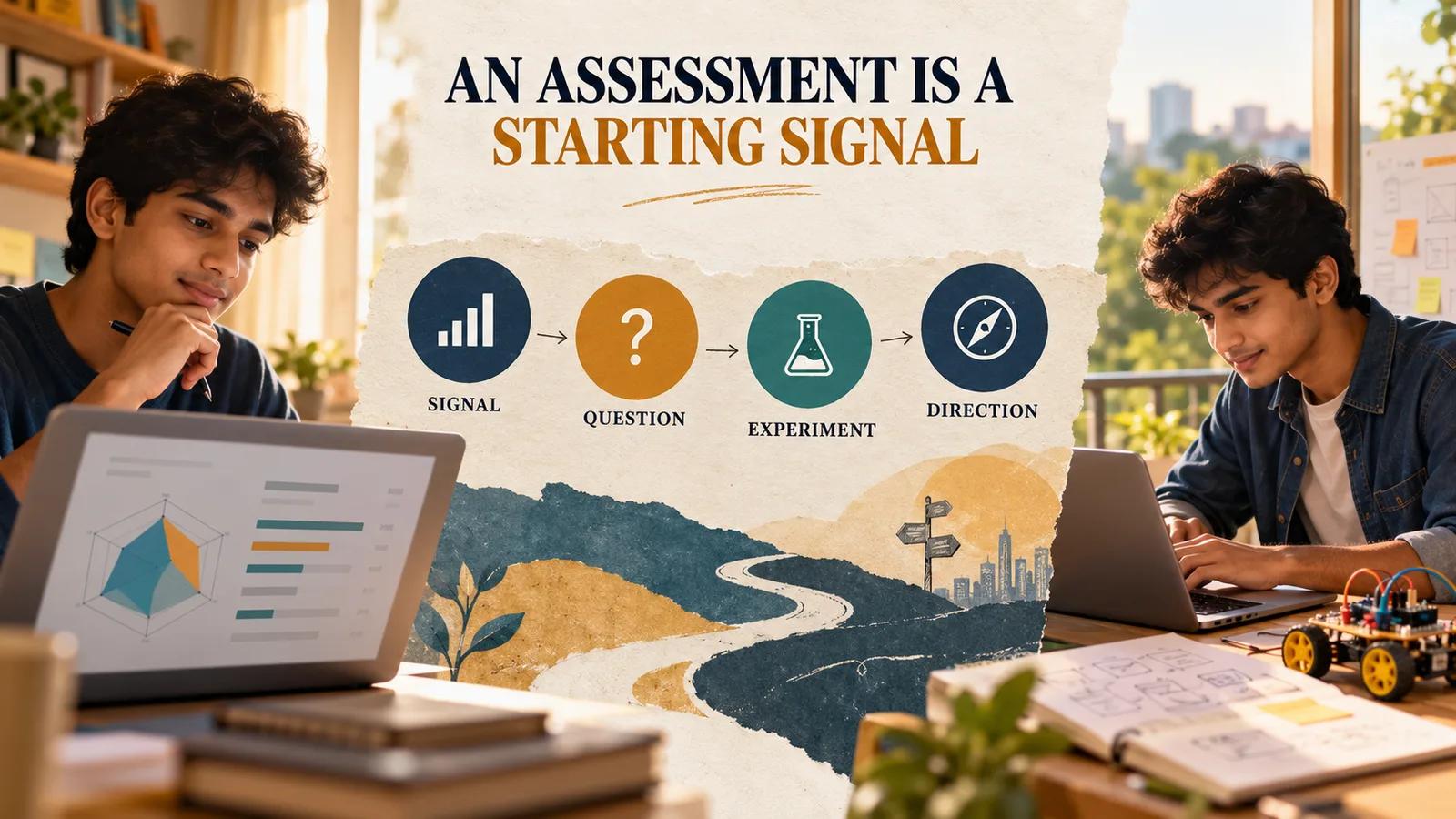
An assessment signal map showing how results become questions, experiments, and direction
Answer honestly

Rate each statement, then choose what you would do

There are no right answers on the statements, so think of your usual pattern, not your best day. In the situations, pick what you would really do, not what sounds best.

Which of these describes you best?

What you write changes with your stage, from exam answers to work emails to reports for several people, so your report adjusts the advice to match.

It appears at the top of your result and in your PDF report. It stays on your device.
What is scored

Five areas of writing this test covers

Writing goes wrong in different ways for different people. Some bury the point, some make small mistakes that cost them marks or trust, some sound too casual or too stiff, some never check their work, and some find work writing the hardest. Your lowest area is the best place to begin.

Clarity and structure

Making your main point easy to find and follow

High score: The person reading finds your main point in the first lines and follows your order without effort.

Low score: Your point sits under background and long sentences, so people have to hunt for what you want to say.

Grammar and accuracy

Getting words, names, numbers and sentences right

High score: Your writing has few slips in spelling, grammar, names and figures, and you know where your own mistakes usually happen.

Low score: Small errors in names, tenses, numbers or punctuation keep reaching the final copy, and they can cost marks or trust.

Tone and audience

Fitting your words to the person who will read them

High score: You think about who is reading, what they know and what they need, and you adjust your tone to match.

Low score: You write in one style for everyone, so messages can sound too casual, too stiff or too hard for the person to follow.

Editing and revising

Checking and improving what you wrote before it goes out

High score: You treat the first version as a draft, check it before sending and ask others for a view on important pieces.

Low score: Your first version is usually your final version, so errors and unclear lines go straight to the person reading.

Writing for work

Emails, updates, reports and resume lines that get results

High score: Your emails, updates and resume lines say what you did, what you need and what happens next.

Low score: Subject lines are vague, updates leave questions behind and resume lines list duties instead of what you actually did.

How to read your writing skills result

Writing is five habits, not one talent

Each statement describes something you do: put the point first, check a name, adjust your tone, read the draft again, end with a next step. Habits can be practised, so a low area means a habit you have not built yet, not a limit on what you can write.

Many people find that one area holds the others back. Perfect grammar does not help if the point is buried, and a clear message can still lose trust if a name or a date is wrong.

What this test can and cannot show

This is a self-rating plus situation questions where you choose the best move. It does not read your actual writing, so it cannot grade your grammar, vocabulary or fluency in English or any other language.

To see how you really write, put a recent email or answer next to your result and check it against the area you scored lowest. A teacher, senior or friend can point out what you cannot see in your own work.

Your result and your stage

A student writes exam answers, assignments, applications and emails to teachers. A fresher writes work emails, updates, cover letters and a first resume. A working professional writes reports, proposals and messages that other people act on, often for more than one audience.

The questions share the same five areas, but the extra statements and the advice in your report change with the stage you pick.

Writing and your career

Most jobs involve some writing, and clear emails, updates and resume lines make your work easier to understand and to trust. Some roles, such as content, support, operations, sales and project work, rely on it more than others.

Better writing does not promise a job, a promotion or a higher income. It makes it easier for others to see what you can do, and it is also a base for paid writing work if you later choose that path.

Check the result against real writing

Take one email, assignment or document you wrote in the past month and mark the point, the next step and any errors. If what you see does not match your score, trust the real piece of writing and adjust your practice.

Retake the test after about four weeks of working on your lowest area. A small rise is a sign that the practice is helping, though a better real email is the better proof.

Limits to keep in mind

  • This is a self-rating tool and shows how you describe your own writing habits. It does not read, mark or grade any writing you have produced.
  • It is not a certificate, a language test or an official assessment, and it cannot replace a teacher, editor or manager who reads your actual work.
  • Scores come only from your answers and are not compared with other people, so there is no pass mark and no ideal number.
  • It does not predict exam marks, interview results, job performance or income. It points to which writing habits to practise first.
  • It does not measure fluency in English or in any other language, and it is not a diagnosis of any learning difference. If writing is very hard for you, talk to a teacher or a qualified specialist.
Common questions

Before you take the test

What is a writing skills assessment and what does this one measure?

A writing skills assessment checks how well you can put ideas into clear, correct and suitable written words. This one covers five areas: clarity and structure, grammar and accuracy, tone and audience, editing and revising, and writing for work. It shows how you describe your own habits and how you choose in real situations.

Is this writing skills assessment test free?

Yes. It is free, needs no sign-up, takes about 8 minutes and gives an instant result that you can also download as a PDF report.

Is this a grammar test with marks and a pass score?

No. Nobody marks your writing here, and there is no pass mark. You rate your habits and choose the best action in situations such as writing a subject line, following up with a professor or checking a figure, so your result shows habits to practise, not a grade.

How is the score worked out?

You rate each statement from 1 (not true) to 5 (very true). Statements that describe a poor habit, such as accepting a spell checker’s changes without reading them, are scored the other way round. Each situation question has four options worth between 0 and 100 points, an area score is the average of everything asked about that area, and the overall score is the average of your five areas.

How can I improve my writing skills after the result?

Work on your lowest-scoring area first, with one small habit at a time. For example, if clarity is the weak spot, put your request in the first two lines of every message for a week; if editing is weak, read each important message again after a five-minute break. Your report gives a 14-day plan for that area, and retaking the test after a few weeks shows whether it moved.

Does the test work if English is not my first language?

Yes. The habits in the test, such as putting the point first, checking facts and thinking about who will read, apply in any language, and the questions are written in simple English. The test does not judge your vocabulary or fluency, so it is a fair starting point for people who write in English as a second or third language.

Can students, freshers and working professionals all take it?

Yes. You choose your stage before the result, and the extra questions and advice change to match: exam answers and emails to teachers for students, work emails and a first resume for freshers, and reports, proposals and messages for several audiences for working professionals.

Can I use this to prepare for a writing test in a job application?

Some employers ask candidates to write an email or a short report as part of hiring. This test does not mark your writing, but the habits it checks are the ones such tasks reward: the point first, correct names and figures, a suitable tone and a final read. To practise, write a real email or summary, read it again after a break, and ask someone to tell you where they got lost.

Will a high score help me get a job or a better salary?

Nothing here can promise that. Clear writing makes your emails, updates and resume easier to understand, and many roles use writing every day, but hiring and pay depend on much more than a score on a self-rating.

How is this different from the communication skills assessment?

This test looks only at written work, with 41 questions on clarity, accuracy, tone, editing and writing for work. The communication skills assessment is wider and covers listening, speaking, presenting and feedback, with writing as one of its five areas. Use that one for a quick view of all five skills and this one when writing is the part you want to improve.

Free results are step one

Free assessment results are useful. Real career decisions need stronger guidance.

Start with the free test that fits your stage. When the decision gets serious, move to updated career guidance that turns those signals into better choices, stronger skills, and higher leverage.

Use free results to narrow the problem before you commit to a bigger decision.

Use guidance to avoid wasted years, wasted money, and low-value skill choices.

Use the right plan for your stage to turn the result into a practical next step.

Sessions are online across India. The stronger plan gets built inside the guidance service.

Career Guidance Pricing

Students

Student path

Student Career Guidance

Practical student career guidance before the wrong path wastes years, money, and future readiness.

Limited-time student offer
₹3000
₹250
for the first 1-on-1 session

A low-friction first step before the wrong path costs more time and money.

Online across India

Avoid

Wrong streams, outdated degrees, and low-value skills that waste years and money.

Move toward

Useful skills, future readiness, and a clearer next decision.

Working Professionals

1-on-1

Working Professional Career Guidance

For professionals who need clearer pivots, stronger compensation, and higher-leverage career moves.

Limited-time professional offer
₹5000
₹3000
for one 1-on-1 session

Book one sharp 1-on-1 before stagnation, weak positioning, or a bad pivot gets more expensive.

Online across India

Avoid

Salary ceilings, random upskilling, weak positioning, and pivots that waste time and money.

Move toward

More useful skills, sharper positioning, and clearer next moves.