For early career, senior, team lead and government, bank or PSU employees

Promotion Readiness Assessment

Asking "am I ready for a promotion?" usually gets one answer: work harder. Promotions depend on more than effort. This free self-assessment checks five areas: delivering results at your current level, working beyond your job description, making your work visible, your relationships with your manager and sponsors, and the skills for the next level. It then shows which one to work on first. It cannot promise a promotion, because company budgets and open positions are outside your control.

40questions
5readiness areas
FreePDF report
Want more than one result? Take the full free career assessment for your stage: 6 tests in one report →

Self-rating tool for reflection. It is not a clinical, hiring or selection test.

A student taking an online career assessment on a tablet
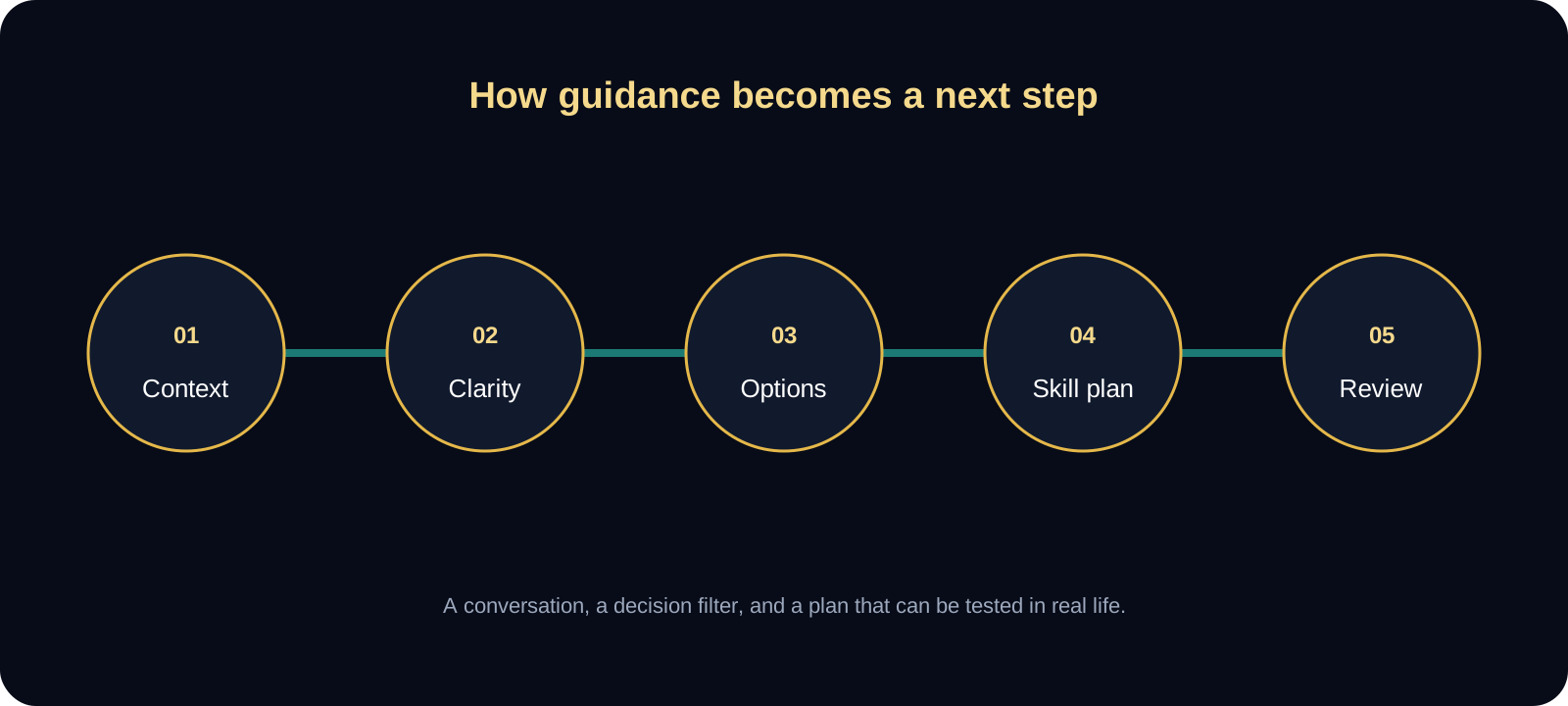
Five-stage career guidance session flow from context to review
A guidance session moves from context to clarity, options, a skill plan and review.
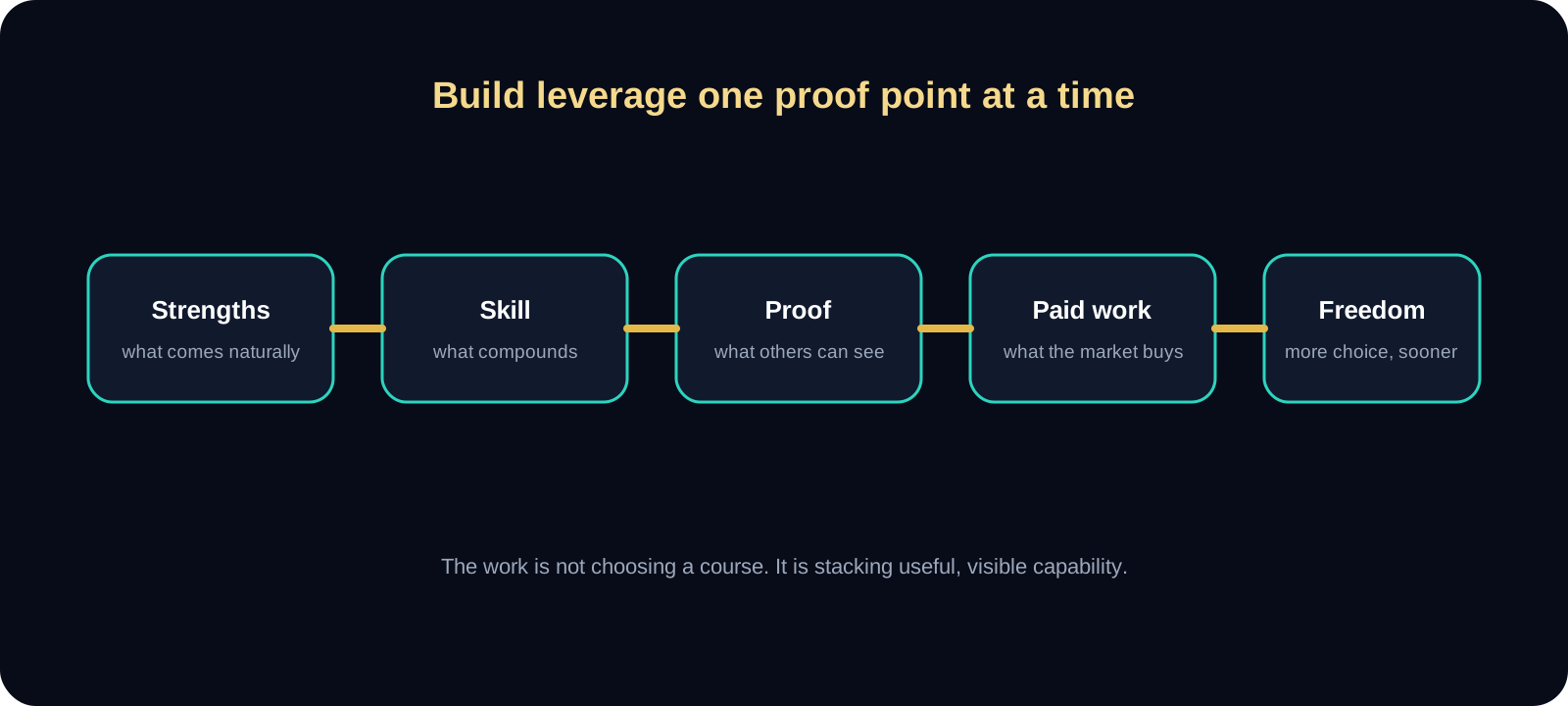
Skill portfolio chain from strengths to financial freedom
Strengths become skills, skills become visible proof, and proof leads to paid work and more freedom.
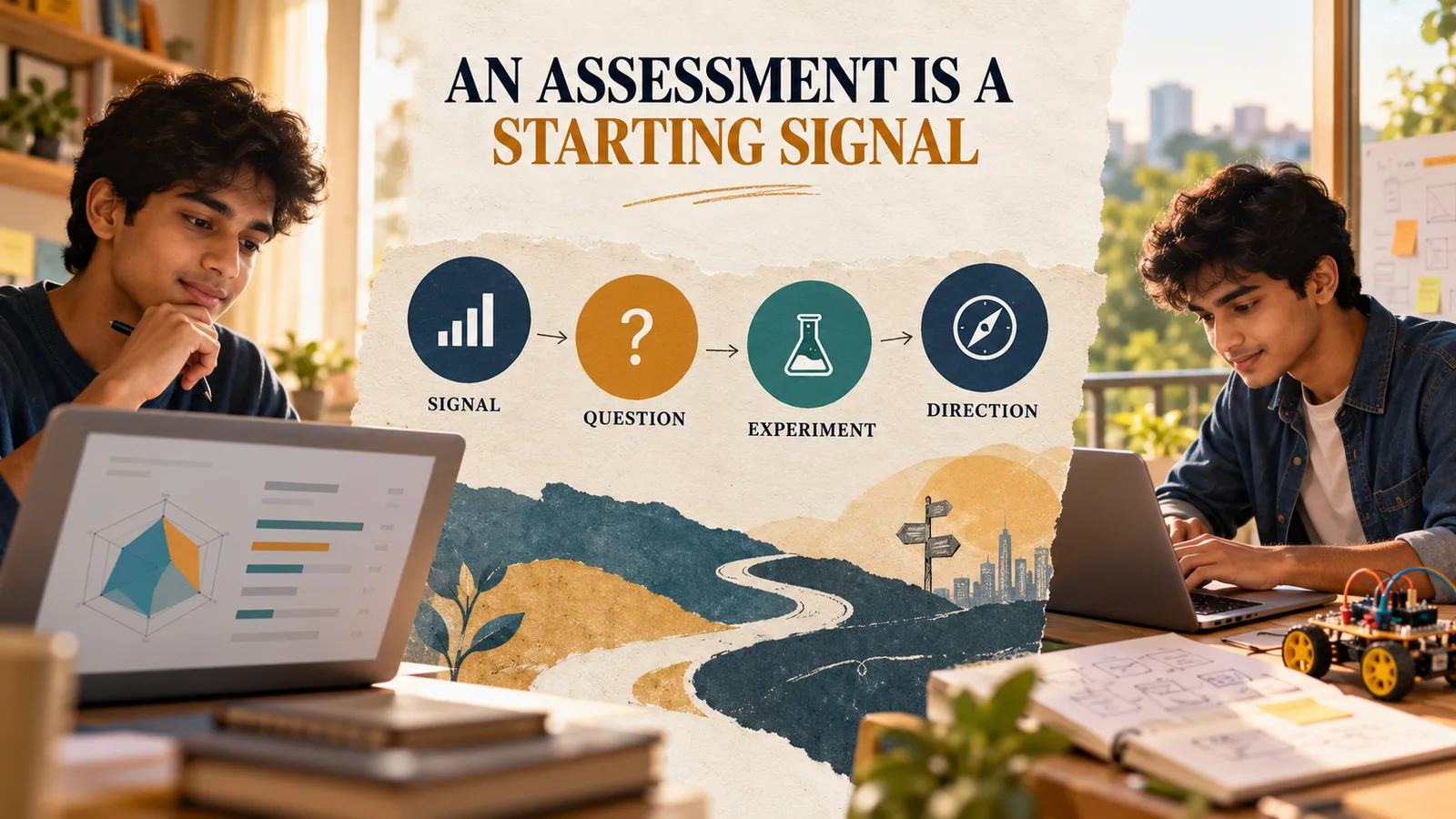
An assessment signal map showing how results become questions, experiments, and direction
Answer honestly

Rate each statement, then choose what you would do

There are no right answers on the statements, so think of your usual pattern, not your best day. In the situations, pick what you would really do, not what sounds best.

Which of these describes your job right now?

Promotion in your first years, as a senior specialist, as a team lead and in a government or bank job work very differently, so your report adjusts the advice to match. Promotions also depend on budgets and openings that you cannot control.

It appears at the top of your result and in your PDF report. It stays on your device.
What is scored

Five promotion readiness areas this assessment covers

A promotion decision looks at what you have delivered, what more you already do, who knows about it, who supports you and whether you can handle the next level. These five areas turn those into habits you can rate honestly.

Delivering results at your current level

Solid, reliable work that is clearly yours

High score: Your core work is dependable, you can name what changed because of it, and your results have held across more than one review cycle.

Low score: Your output is uneven, you count tasks instead of outcomes, or you cannot say which results are truly yours.

Working beyond your job description

Taking on work that looks like the next level

High score: You pick up useful work that nobody assigned, finish it, and have handled something bigger than your usual tasks.

Low score: You stay inside your listed duties, wait when work falls between roles, or start extra work and leave it unfinished.

Making your work visible

Letting the right people know what you have done

High score: People who decide on promotions can describe your main achievements, because you share progress and results regularly and keep a record.

Low score: You assume good work is noticed on its own, so decision makers hear about your work late, from others, or not at all.

Manager, sponsors and relationships

People who know your work and will speak for it

High score: You have talked openly with your manager about growth, understand how decisions are made, and have a senior person beyond your manager who knows your work.

Low score: You have not discussed promotion with your manager, do not know who decides, or work mostly alone with little contact outside your team.

Skills for the next level

Showing you can do the next job, not only this one

High score: You know what the next role actually involves, you have asked for feedback on your gaps, and you are already practising one skill from that level.

Low score: You are unsure how the next role differs from yours, have not asked about your gaps, or are only getting better at your current tasks.

How to read your promotion readiness result

Readiness is more than good work

Good results are the base, but a promotion decision also asks whether you already work at the next level, whether the right people know it, and whether someone will support your case. This assessment turns each of those into statements about what you do, so a lower score points to a habit you can start, not to a lack of ability.

Why these five areas

Results and scope describe your work. Visibility and allies describe how your work is seen and supported. Skills describe whether you can do the next job. If one of these is missing, the others often cannot make up for it: strong results that nobody knows about, or a good relationship with a manager without results to point to, both leave a gap.

Your career stage changes the weight. Early in your career, reliable results and a clear talk with your manager matter most. Senior individual contributors need scope and influence. Team leads need to show they can work through others. In government, bank and PSU jobs, written service rules and seniority carry more of the decision, so check your own rules.

Look at the lowest area, then at the pattern

Your overall score is only a summary. The more useful reading is the lowest area, because it is usually the one holding the rest back. A high score in results with a low score in visibility, for example, suggests you are doing the work but not sharing it. A low score in skills with a high score in scope may mean you are busy but not yet building the new skills.

What a high score does and does not mean

A high score means your habits match what people usually look for at the next level. It does not mean a promotion is due. Promotions also depend on company budgets, open positions, timing of review cycles and decisions made by others. Use your score to improve what you control, and talk to your manager about the rest.

Limits to keep in mind

  • This is a self-rating tool and shows how you describe your own habits. It does not replace an honest conversation with your manager or a mentor who knows your work.
  • It cannot predict whether you will be promoted. Promotions depend on company budgets, open positions, review cycles and decisions made by other people, which you cannot control.
  • Scores are not compared with other people, so there is no pass mark. A high score does not mean a promotion is due, and a low score does not mean you are not good at your job.
  • Every company, bank and government department has its own promotion rules. Your appointment letter, service rules and official circulars come first.
Common questions

Before you take the test

Is this promotion readiness test free?

Yes. You can take it without paying and without signing up, see your result on screen and download the report as a PDF.

How do I know if I am ready for a promotion?

You can tell by checking five things: results at your current level, work beyond your job description, visibility of your work, support from your manager and sponsors, and skills for the next level. This assessment rates each part so you can see which are in place and which need work. It cannot tell you whether a promotion will happen, as budgets and openings also matter.

What is a good score on this assessment?

There is no pass mark. Scores are only against your own answers, not against other people. Use the area scores to decide what to work on first, and retake the assessment after a month or two to see what changed.

How is the score worked out?

Statements are rated from 1 to 5 and the ones worded in the negative are reversed. In the situation questions, each option carries a score from 0 to 100. Each area score is the average of its statements and situations, shown out of 100, and the overall score is the average of the five areas.

Can I use this promotion self-assessment if I work in a government job, bank or PSU?

Yes. You choose your stage, including government, bank or PSU employees, where promotion follows written service rules. The extra questions and advice then focus on checking your service rules, your seniority entry, your annual performance reports and what you can still influence. Your service rules and official circulars always come first.

Can freshers or people with less than three years of experience use it?

Yes. The early career stage covers the first few years of work, with questions on reliability, learning and having a first conversation with your manager about growth. You do not need a long record to use it.

What if I score high but my company says there is no budget or opening?

That can happen, and it does not mean your work is not valued. Ask your manager what the realistic timeline is and what you should keep building in the meantime. If there is no path at all, your area scores and examples can help you prepare for talking to other employers.

How do I ask my manager about a promotion?

Ask for a planned 30-minute conversation about growth, not a quick question in the corridor. Say where you are, where you want to go and ask what you would need to show for the next level, then write down the answer and agree a date to review it. The Manager, sponsors and relationships area of this assessment gives you the exact words to use.

How is this different from the leadership skills or soft skills assessments?

Those tests look at leadership or workplace behaviour in general. This one is about the steps around a promotion: results, scope, visibility, support and next-level skills. Taking the leadership and soft skills assessments as well can show whether a weak area comes from promotion habits or from wider skills.

Free results are step one

Free assessment results are useful. Real career decisions need stronger guidance.

Start with the free test that fits your stage. When the decision gets serious, move to updated career guidance that turns those signals into better choices, stronger skills, and higher leverage.

Use free results to narrow the problem before you commit to a bigger decision.

Use guidance to avoid wasted years, wasted money, and low-value skill choices.

Use the right plan for your stage to turn the result into a practical next step.

Sessions are online across India. The stronger plan gets built inside the guidance service.

Career Guidance Pricing

Students

Student path

Student Career Guidance

Practical student career guidance before the wrong path wastes years, money, and future readiness.

Limited-time student offer
₹3000
₹250
for the first 1-on-1 session

A low-friction first step before the wrong path costs more time and money.

Online across India

Avoid

Wrong streams, outdated degrees, and low-value skills that waste years and money.

Move toward

Useful skills, future readiness, and a clearer next decision.

Working Professionals

1-on-1

Working Professional Career Guidance

For professionals who need clearer pivots, stronger compensation, and higher-leverage career moves.

Limited-time professional offer
₹5000
₹3000
for one 1-on-1 session

Book one sharp 1-on-1 before stagnation, weak positioning, or a bad pivot gets more expensive.

Online across India

Avoid

Salary ceilings, random upskilling, weak positioning, and pivots that waste time and money.

Move toward

More useful skills, sharper positioning, and clearer next moves.