A speaking skills checklist for structure, slides, delivery, questions and nerves

Presentation Skills Assessment

This free presentation skills assessment shows which part of presenting to work on first: structure, slides, delivery, handling questions, or nerves and preparation. Often the gap is not confidence but a crowded slide or a talk with no clear main point. It works for class talks, interviews, team updates and client meetings.

41questions
5presenting areas
FreePDF report
Want more than one result? Take the full free career assessment for your stage: 6 tests in one report →

Self-rating tool for reflection. It is not a clinical, hiring or selection test.

A student taking an online career assessment on a tablet
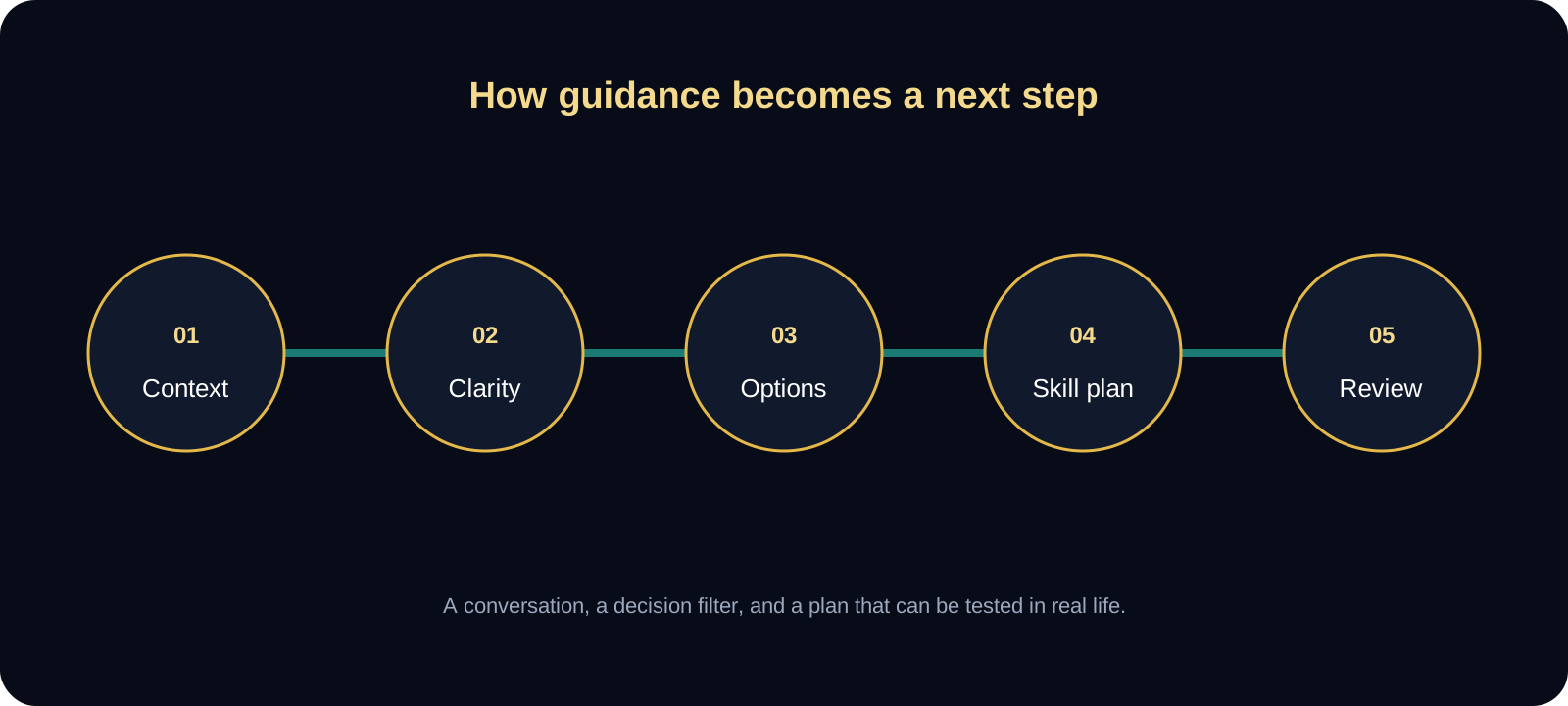
Five-stage career guidance session flow from context to review
A guidance session moves from context to clarity, options, a skill plan and review.
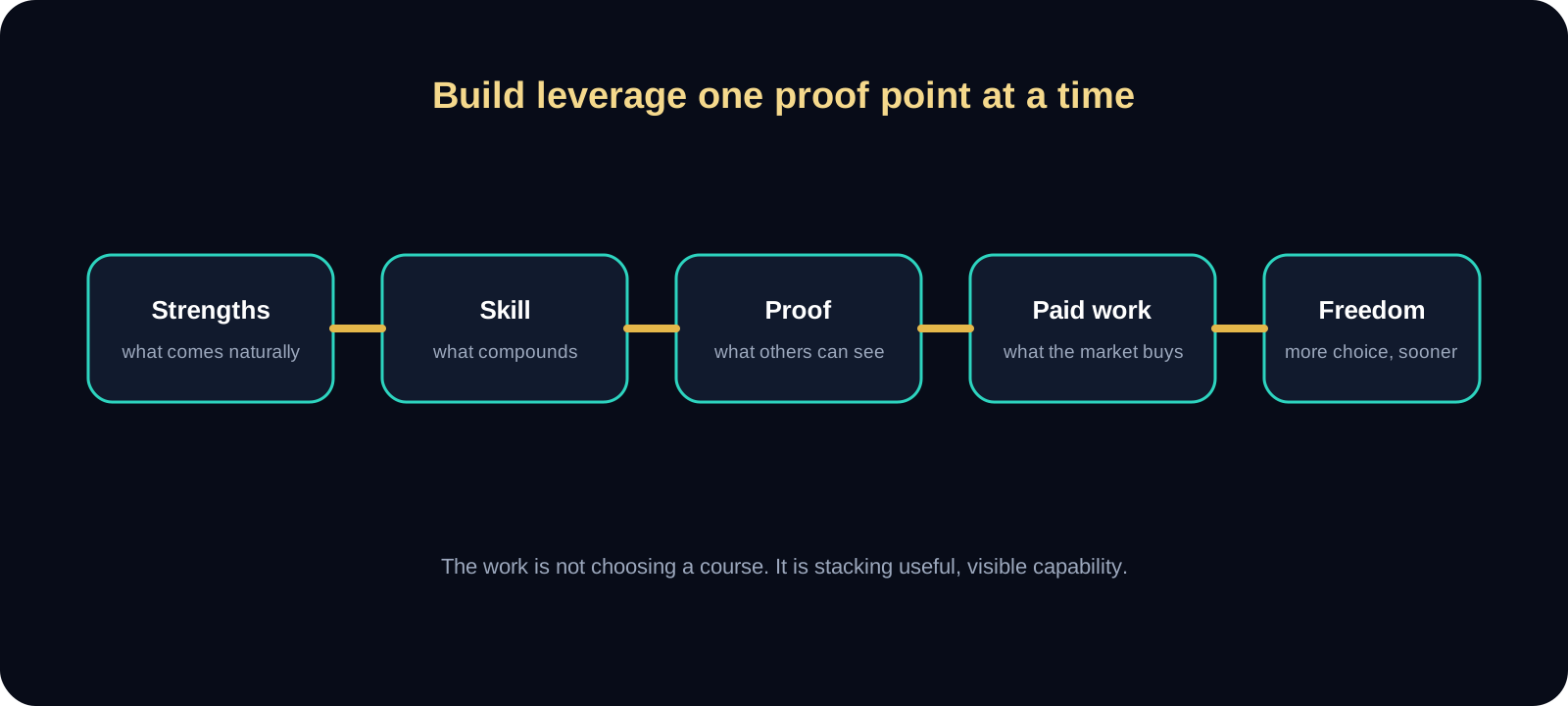
Skill portfolio chain from strengths to financial freedom
Strengths become skills, skills become visible proof, and proof leads to paid work and more freedom.
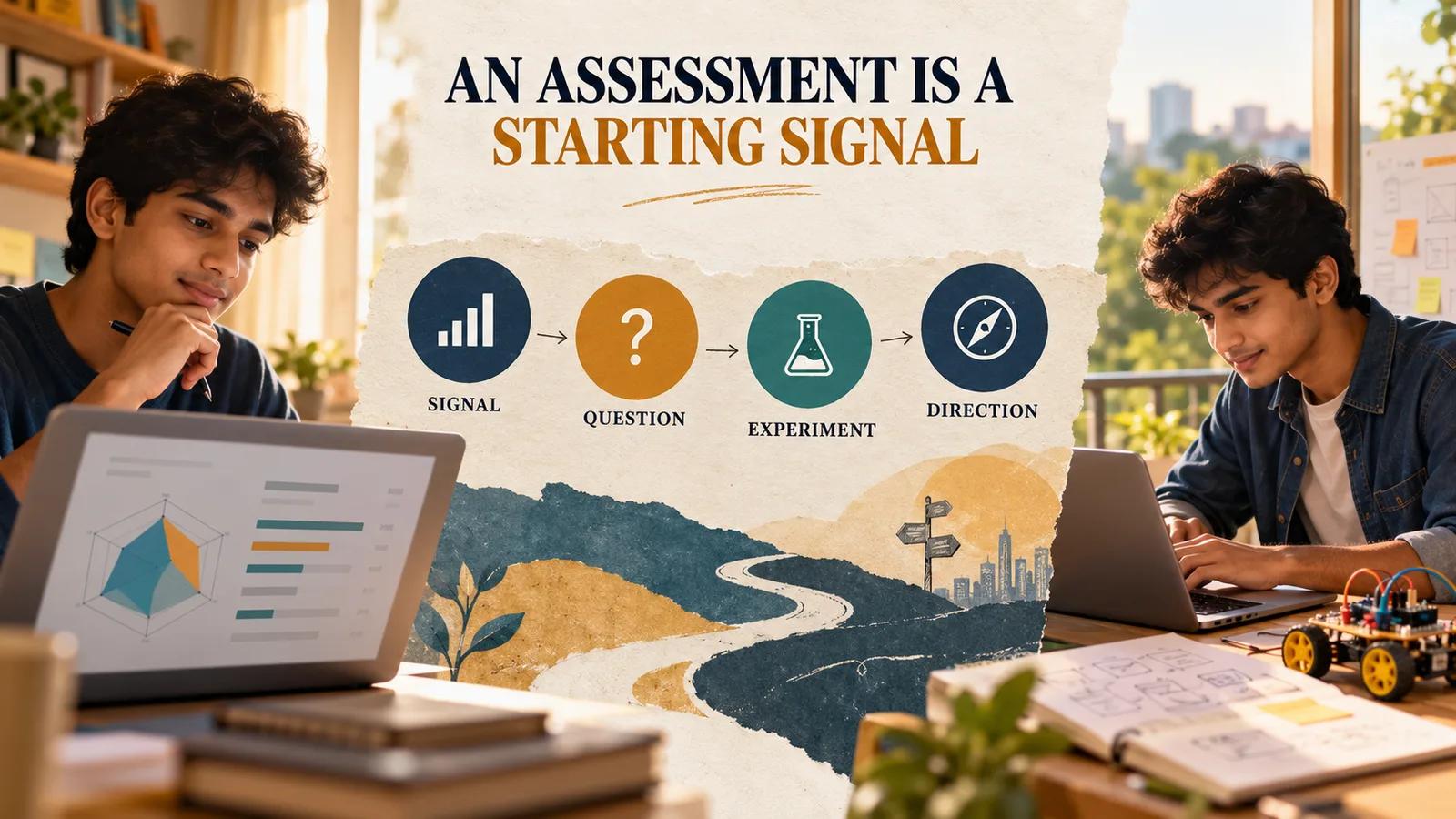
An assessment signal map showing how results become questions, experiments, and direction
Answer honestly

Rate each statement, then choose what you would do

There are no right answers on the statements, so think of your usual pattern, not your best day. In the situations, pick what you would really do, not what sounds best.

Where will you be presenting first?

A class talk, an interview and a client meeting need different things from you, so your report adjusts the advice to the setting you choose.

It appears at the top of your result and in your PDF report. It stays on your device.
What is scored

Five parts of presenting this assessment covers

A talk can go wrong in different places. One person has good ideas in no clear order, another has a clear order on unreadable slides, and another knows everything until the first question arrives. Your lowest area is the best place to start.

Structure and message

Knowing what you want people to take away, and building the talk around it

High score: You know your main message before you build anything, and your talk has an opening, a few points with examples and a clear ending.

Low score: Your talk holds many good points but no single message, so people leave unsure what to remember or do.

Slides and visuals

Making slides that help people follow you instead of competing with you

High score: Your slides carry one idea each, are easy to read from a distance and leave the explaining to you.

Low score: Your slides are crowded or read aloud word for word, so people read ahead and stop listening.

Voice, body and pace

Speaking so that the whole room can follow and stay with you

High score: You speak at a pace people can follow, use pauses, look at the room and keep your movements steady.

Low score: You hurry, fill gaps with "um" and "so", look at the screen or the floor, and tend to rush at the end.

Handling questions and the audience

Listening to the room, answering clearly and staying steady when challenged

High score: You listen to the whole question, check you understood it and admit calmly when you do not know.

Low score: You answer before the question ends, get defensive when challenged or ignore signs that people are lost.

Nerves and preparation

Practising in a way that works and keeping nerves manageable on the day

High score: You practise aloud, time yourself, know your opening by heart and have a way to settle before you start.

Low score: You only read your slides silently, avoid chances to speak and let nerves decide how the talk goes.

How to read your presentation skills result

Presenting is five habits, not one talent

Each statement describes something you do: saying your main message in one sentence, cutting a slide down, pausing after a key point, repeating a question, practising aloud. Because these are habits, they can be trained. A low area means a habit you have not built yet, not a fixed weakness in you.

The areas also affect each other. Crowded slides make delivery harder, and a talk with no clear message makes questions harder to answer. Start with the lowest area and check the others after a few weeks.

A short speaking skills checklist to use before any talk

Run these six checks the day before a talk. Can you say the main message in one sentence, and does each slide carry one idea that reads from the back of the room? Can you say your first two sentences without notes?

The last three checks are about practice. Have you practised aloud with a timer, and do you know your three hardest likely questions and answers? Have you tested your slides on the real screen or call link?

Presenting and your career

Interviews, project reviews, client meetings and promotion discussions often include a moment where you explain your work aloud. Presenting well does not replace good work, and it does not promise a job or a raise.

What it can do is make your work easier to notice, understand and trust. Someone who explains clearly can be asked to explain again, which gives more chances to be seen.

Check the result against real talks

Your answers show how you see yourself. After your next talk, ask one person who watched to tell you one thing that was clear and one thing that was hard to follow. Compare their answer with your lowest area.

Retake the assessment after you have given two or three talks using your plan. A rise in your lowest area is a good sign, but what people tell you after a real talk is the better proof.

Limits to keep in mind

  • This is a self-rating tool. It shows how you describe your own habits and cannot see or hear you present.
  • It is not a certificate, an official assessment or an examiner’s grade, and no school, employer or board recognises it as one.
  • Your scores are not set against anyone else’s, so 55 or 85 is not a pass or a fail. Use them to compare your own five areas with each other.
  • It does not predict marks, interview results, selection or pay. It points to where your presenting habits need attention.
  • It is not a medical or mental health assessment. If fear of speaking in front of others is stopping you from daily life, talk to a doctor, a counsellor or someone you trust. In India you can also call Tele-MANAS on 14416, the free national mental health helpline run by the health ministry.
Common questions

Before you take the test

What does this presentation skills assessment measure?

It looks at five parts of presenting: structure and message, slides and visuals, voice and pace, handling questions and the audience, and nerves and preparation. You rate statements about what you actually do and choose between real situations. You get a score for each area and an overall score.

Is this a speaking skills assessment checklist I can use before a talk?

Partly. The test itself is a rating of your habits, and the reading guide in your result includes a short six-point checklist to run the day before a talk. Use the test to find your weak area and the checklist to check each talk.

Does this cover assessment of speaking and listening skills?

It covers the speaking and listening that happen when you present: how you explain, how you pace your voice, and how you listen to questions and read the room. It does not test everyday conversation, writing or feedback. For those, use the communication skills assessment on this site.

How is the score worked out?

You rate each statement from 1 (not true) to 5 (very true). Statements that describe a weak habit, such as reading slides silently, are turned around so that agreeing with them lowers the score. Each situation gives 0 to 100 points depending on the option you pick, and an area score is the average of its answers. Your overall score is the average of the five areas.

What is a good score on a presentation skills test?

There is no pass mark. Your score is based only on your own answers and is not compared with anyone else. A lower area is simply where a small change will help you most, and you can retake the test later to see whether it moved.

How can I improve my presentation skills after the result?

Work on your lowest area first, with one habit at a time. For example, if slides are the weak spot, cut your busiest slide down to one idea. The 14-day routine in your report gives four steps for that area, and practising aloud with a timer helps in every area.

Is this a stage fright or public speaking anxiety test?

No. It has one area on nerves and preparation, but it only asks about habits such as practising aloud and having a way to settle before you start. It cannot measure your fear or diagnose anything, so if fear of speaking affects your daily life, speak to a counsellor or doctor.

Can students and freshers use it for viva, seminar or interview practice?

Yes. You choose your stage before the result, and the extra questions and advice change to match: group talks and viva for students, interviews and first team updates for freshers, and client and senior meetings for working professionals.

How is this different from the communication skills assessment?

The communication skills assessment covers listening, speaking, writing, feedback and presenting in a broad way. This one is only about presenting and goes deeper into slides, structure, delivery, answering questions and preparation.

Free results are step one

Free assessment results are useful. Real career decisions need stronger guidance.

Start with the free test that fits your stage. When the decision gets serious, move to updated career guidance that turns those signals into better choices, stronger skills, and higher leverage.

Use free results to narrow the problem before you commit to a bigger decision.

Use guidance to avoid wasted years, wasted money, and low-value skill choices.

Use the right plan for your stage to turn the result into a practical next step.

Sessions are online across India. The stronger plan gets built inside the guidance service.

Career Guidance Pricing

Students

Student path

Student Career Guidance

Practical student career guidance before the wrong path wastes years, money, and future readiness.

Limited-time student offer
₹3000
₹250
for the first 1-on-1 session

A low-friction first step before the wrong path costs more time and money.

Online across India

Avoid

Wrong streams, outdated degrees, and low-value skills that waste years and money.

Move toward

Useful skills, future readiness, and a clearer next decision.

Working Professionals

1-on-1

Working Professional Career Guidance

For professionals who need clearer pivots, stronger compensation, and higher-leverage career moves.

Limited-time professional offer
₹5000
₹3000
for one 1-on-1 session

Book one sharp 1-on-1 before stagnation, weak positioning, or a bad pivot gets more expensive.

Online across India

Avoid

Salary ceilings, random upskilling, weak positioning, and pivots that waste time and money.

Move toward

More useful skills, sharper positioning, and clearer next moves.