For a job you are in, an offer you hold, a new role or a comparison of roles

Job Fit Self-Assessment

When a job feels wrong, it is hard to say which part is wrong. This free self-assessment checks five areas of fit, the day-to-day work, your manager and team, learning and growth, pay, hours and life, and meaning and values, then shows which parts to fix, which to test and which to weigh. Answer about the job you are in, or the job you are considering. It does not tell you to stay or to leave.

40-42questions
5fit areas
FreePDF report
Want more than one result? Take the full free career assessment for your stage: 6 tests in one report →

Self-rating tool for reflection. It is not a clinical, hiring or selection test.

A student taking an online career assessment on a tablet
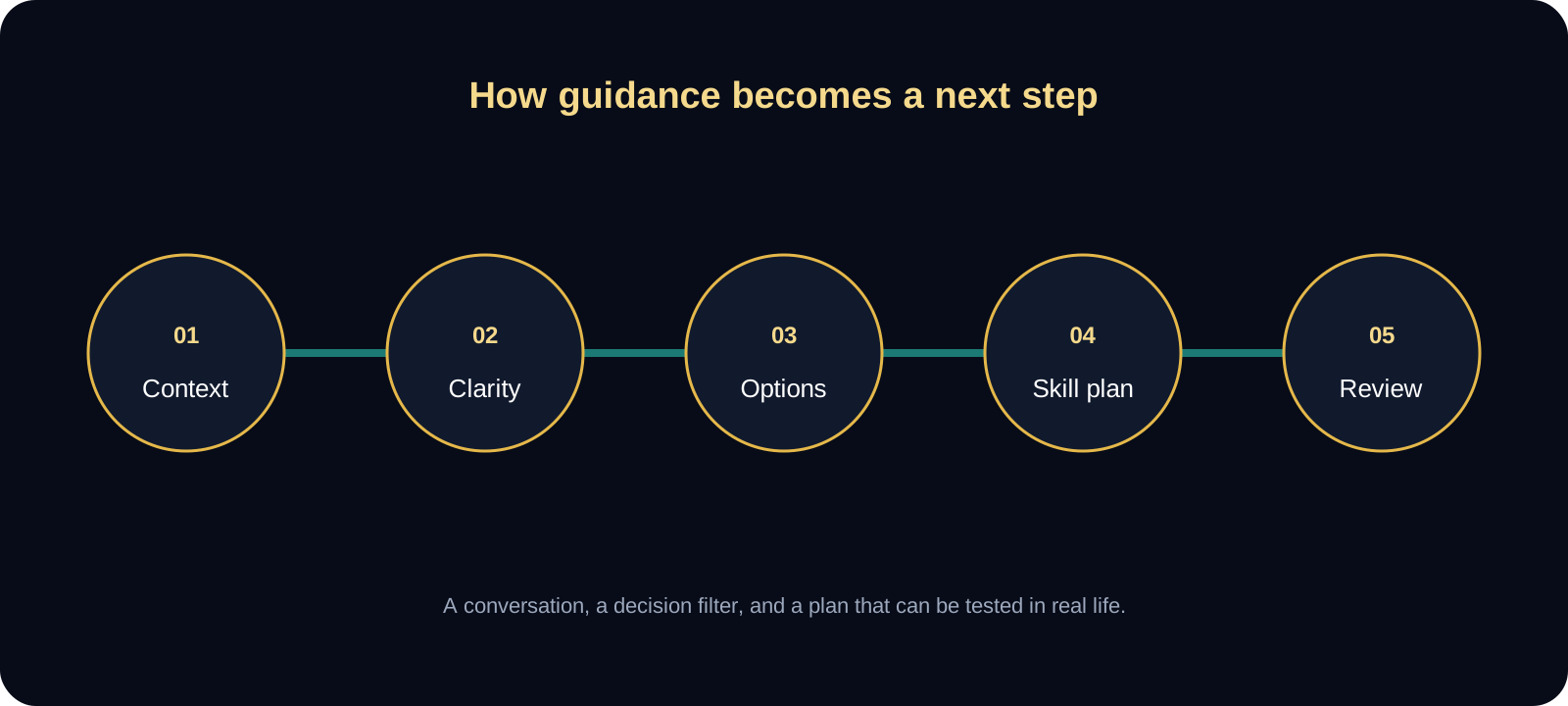
Five-stage career guidance session flow from context to review
A guidance session moves from context to clarity, options, a skill plan and review.
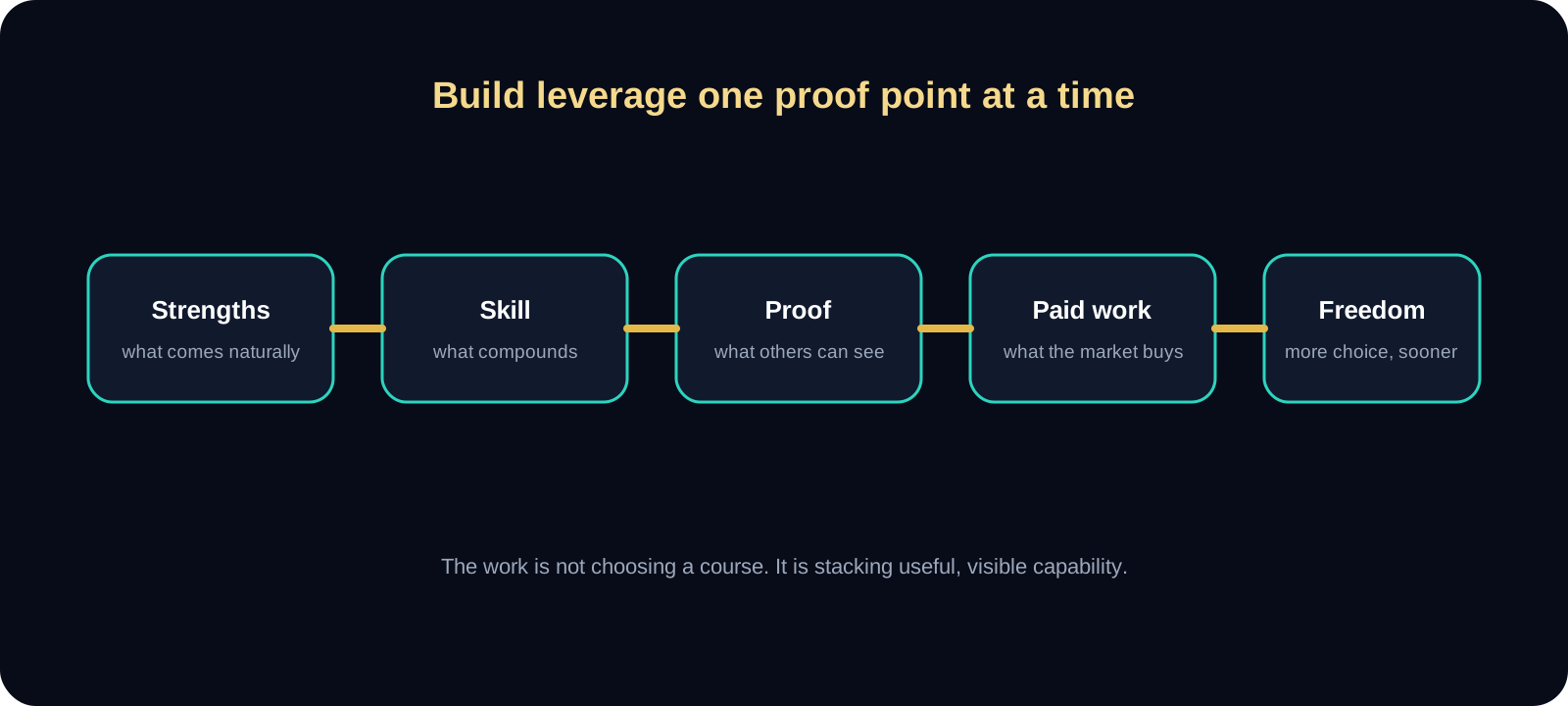
Skill portfolio chain from strengths to financial freedom
Strengths become skills, skills become visible proof, and proof leads to paid work and more freedom.
An assessment signal map showing how results become questions, experiments, and direction
Answer honestly

Rate each statement, then choose what you would do

There are no right answers on the statements, so think of your usual pattern, not your best day. In the situations, pick what you would really do, not what sounds best.

Which of these describes your situation?

Choose the situation closest to yours. A doubt in an old job, an offer in your hand, a new job and a comparison of roles need different checks, so your report adjusts the advice to match.

It appears at the top of your result and in your PDF report. It stays on your device.
What is scored

Five areas of job fit this self-assessment covers

A job can suit you in one way and not in another. Good pay with a draining team, or a kind manager with no learning, are different problems with different answers. These five areas separate them so you can see what is actually wrong.

Day-to-day work fit

Whether the tasks themselves suit you

High score: The tasks you do most days use skills you value, and you can tell what a good day of work looks like.

Low score: Much of your week goes on tasks that drain you or that are far from what you expected, and it is hard to say what counts as good work.

Manager, team and culture

Whether the people and the way of working suit you

High score: You know what is expected of you, you can speak up safely, and there is someone at work you can turn to.

Low score: Expectations are unclear, speaking up feels risky, or you feel you must hide how you think to fit in.

Learning and growth

Whether you are building skills and options

High score: You are learning useful things, you can see a next step, and the skills you build would be valued beyond this one company.

Low score: Your work has stayed the same for a long time, nobody has discussed your next step, or your skills are very specific to this one place.

Pay, hours, location and life fit

Whether the job fits the life around it

High score: Your hours, travel and pay leave you enough rest, time and money for the life you want, and your terms are clear to you.

Low score: Long or unpredictable hours, travel, pay that does not cover your plans, or unclear terms are costing you rest, time or peace of mind.

Meaning and values fit

Whether the work and the company sit well with what you care about

High score: You can say why your work matters in terms you believe, and you are comfortable with how the company behaves.

Low score: You feel uneasy about parts of the work or the company, or you find yourself explaining the job away when people ask about it.

How to read your job fit result

Fit is made of parts, not one feeling

Wanting to leave a job usually arrives as one heavy feeling. Underneath, it is usually one or two parts that are not working: the tasks, the manager, the lack of learning, the hours or the values. Each statement here describes something you can notice in a normal week, so the result shows which part is behind the feeling.

Fix, test or weigh

A low score in an area does not mean the job is wrong for you. It means one of three things. Some gaps can be fixed with a conversation or a change of routine. Some need a test first, such as asking for a new task for a month, to see whether the gap is real. Some are trade-offs to weigh against what the job gives you, such as security, learning or a short commute.

Your report suggests which of the three fits each low area. The decision about whether to stay, move internally or look elsewhere stays with you.

Your situation changes what matters

If you are in a job and wondering, the useful question is which part is wrong and whether it can change. If you are holding an offer, the useful question is what you still need to verify before saying yes. If you are new in a role, early doubts need a few ordinary weeks of evidence before they are treated as a verdict. If you are comparing roles, the same five points applied to each role make the choice clearer than a general impression.

Look at the lowest area, and at the pattern

The overall score is only a rough summary. A strong overall score with one very low area, such as values, may still deserve serious attention. A middling score across all five areas may point to a tired period more than a poor job. Look at the lowest area first, then retake the test in a month, after you have tried one change, to see what moved.

Limits to keep in mind

  • This is a self-rating tool and shows how you describe your own job at one point in time. It does not know your employer, your manager or your circumstances, and it cannot tell you whether to stay in a job, accept an offer or leave.
  • It is not an employer evaluation and does not measure your performance, and it does not predict your future in any job or company.
  • Scores are not compared with other people, so there is no pass mark. A high score does not mean the job is right for everyone, and a low score does not mean the job is wrong for you.
  • Money, family responsibilities, health, visas, loans and the state of the job market are real constraints that no self-rating can see. Weigh them yourself and, where needed, speak to someone you trust.
  • Points about offer letters, contracts, notice periods and probation are general things to check, not legal advice. If there is a dispute or a serious doubt about your terms, speak to a qualified professional.
  • This is not a medical or mental-health assessment. If work is leaving you unable to cope, or you have thoughts of harming yourself, please speak to a doctor, a counsellor or someone you trust. Tele-MANAS (14416) is a free national helpline.
Common questions

Before you take the test

Is this job fit test free?

Yes. You can take it without paying and without signing up, see your result on screen and download the report as a PDF.

Is this job right for me, or should I quit? Can this test tell me?

No, it cannot decide for you and it does not try to. It rates five parts of fit from your own answers, so you can see which parts work, which need fixing and which are trade-offs, and it suggests small tests to run for a few weeks before any big step. Often one or two parts are behind the feeling that the whole job is wrong, and money, notice terms and your next step matter as much as how the job feels.

What are the signs that a job is not a good fit?

Common signs are dreading most of your tasks, not knowing what is expected of you, feeling unable to speak up, learning nothing for months, hours that leave no rest, and unease about what you are asked to do. One bad week is not a sign, a pattern over several weeks is. This test groups these signs into five areas so you can see which one is behind the feeling.

What is a good score on this test?

There is no pass mark. Scores are only against your own answers, not against other people. Use the area scores to decide what to look at first, and retake the test after a month to see what changed.

How is the score worked out?

Statements are rated from 1 to 5 and the ones worded in the negative are reversed. In the situation questions, each option carries a score from 0 to 100. Each area score is the average of its statements and situations, shown out of 100, and the overall score is the average of the five areas.

Can I use this as a job offer decision checklist?

Yes. Choose the stage for holding or expecting an offer, and the extra questions and advice focus on what to verify before you accept, such as the real tasks, your manager, review and pay terms in writing, and probation terms. You can also use it on two offers and compare the area scores side by side.

Is it normal to doubt a new job? Can freshers take this test?

Yes, doubt in the first few months is common because everything is new, so give it a few ordinary weeks of evidence before treating it as a verdict. Freshers can take it too: there are stages for the first six months in a new job and for job seekers comparing roles. If you have not yet worked, answer about the role you are considering, or about an internship or project, and use the advice for comparing roles.

Is this job satisfaction self-assessment a mental-health test?

No. It looks at how well a job fits you, not at your health, and it cannot say whether you are stressed or unwell. If work is making daily life hard to manage, a doctor, a counsellor or someone you trust is the right person to talk to.

Free results are step one

Free assessment results are useful. Real career decisions need stronger guidance.

Start with the free test that fits your stage. When the decision gets serious, move to updated career guidance that turns those signals into better choices, stronger skills, and higher leverage.

Use free results to narrow the problem before you commit to a bigger decision.

Use guidance to avoid wasted years, wasted money, and low-value skill choices.

Use the right plan for your stage to turn the result into a practical next step.

Sessions are online across India. The stronger plan gets built inside the guidance service.

Career Guidance Pricing

Students

Student path

Student Career Guidance

Practical student career guidance before the wrong path wastes years, money, and future readiness.

Limited-time student offer
₹3000
₹250
for the first 1-on-1 session

A low-friction first step before the wrong path costs more time and money.

Online across India

Avoid

Wrong streams, outdated degrees, and low-value skills that waste years and money.

Move toward

Useful skills, future readiness, and a clearer next decision.

Working Professionals

1-on-1

Working Professional Career Guidance

For professionals who need clearer pivots, stronger compensation, and higher-leverage career moves.

Limited-time professional offer
₹5000
₹3000
for one 1-on-1 session

Book one sharp 1-on-1 before stagnation, weak positioning, or a bad pivot gets more expensive.

Online across India

Avoid

Salary ceilings, random upskilling, weak positioning, and pivots that waste time and money.

Move toward

More useful skills, sharper positioning, and clearer next moves.