Customers, pricing, cash, trust and teamwork in real situations

Business Quiz for College Students

This business quiz for college students checks your business sense, not your exam marks. You rate what you actually do and choose what you would do in real situations about customers, pricing, cash, trust and teamwork, so the score shows your judgement habits. It works for BBA, BCom, MBA, management and engineering students, uses made-up rupee amounts as examples, and ends with a small test-before-you-invest step for your lowest area.

47questions
5business areas
FreePDF report
Want more than one result? Take the full free career assessment for your stage: 6 tests in one report →

Self-rating tool for reflection. It is not a clinical, hiring or selection test.

A student taking an online career assessment on a tablet
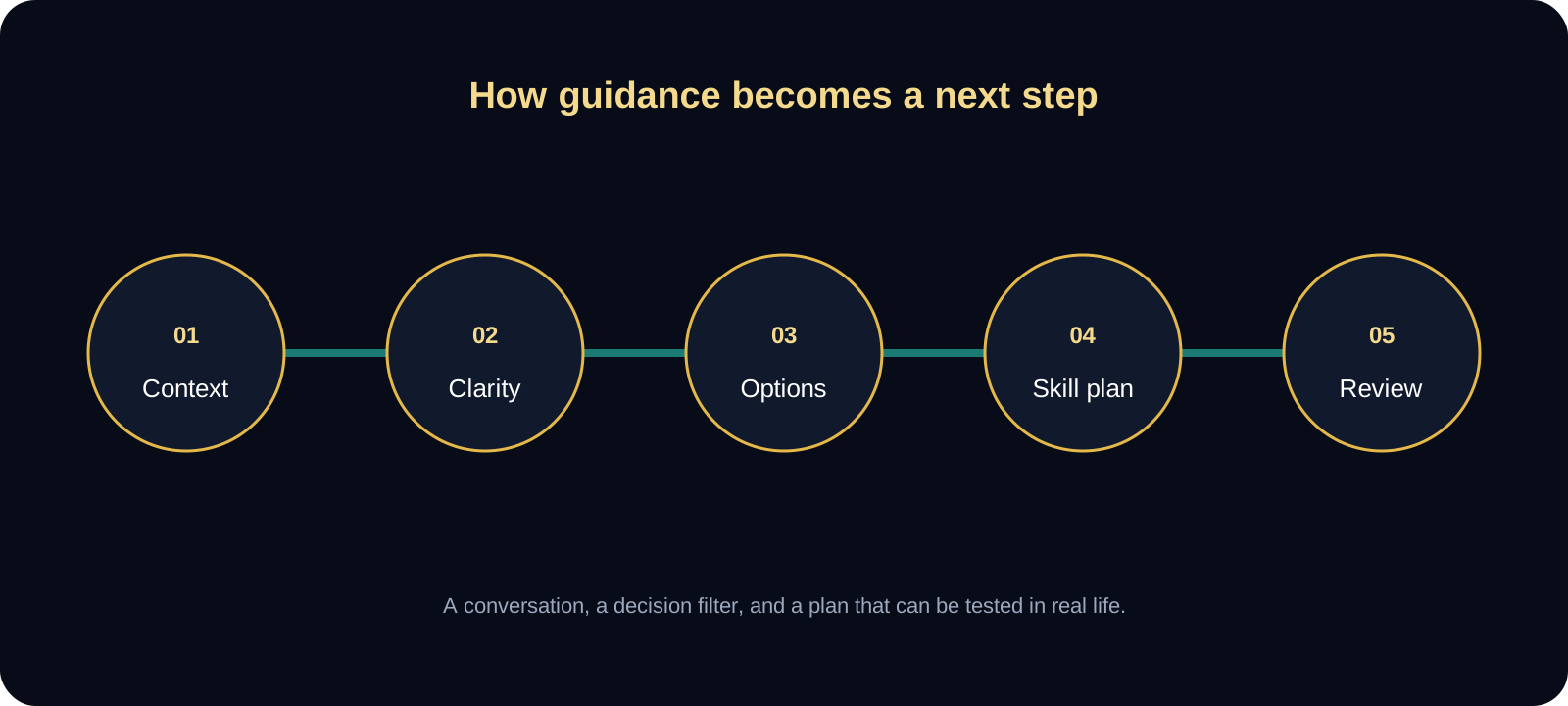
Five-stage career guidance session flow from context to review
A guidance session moves from context to clarity, options, a skill plan and review.
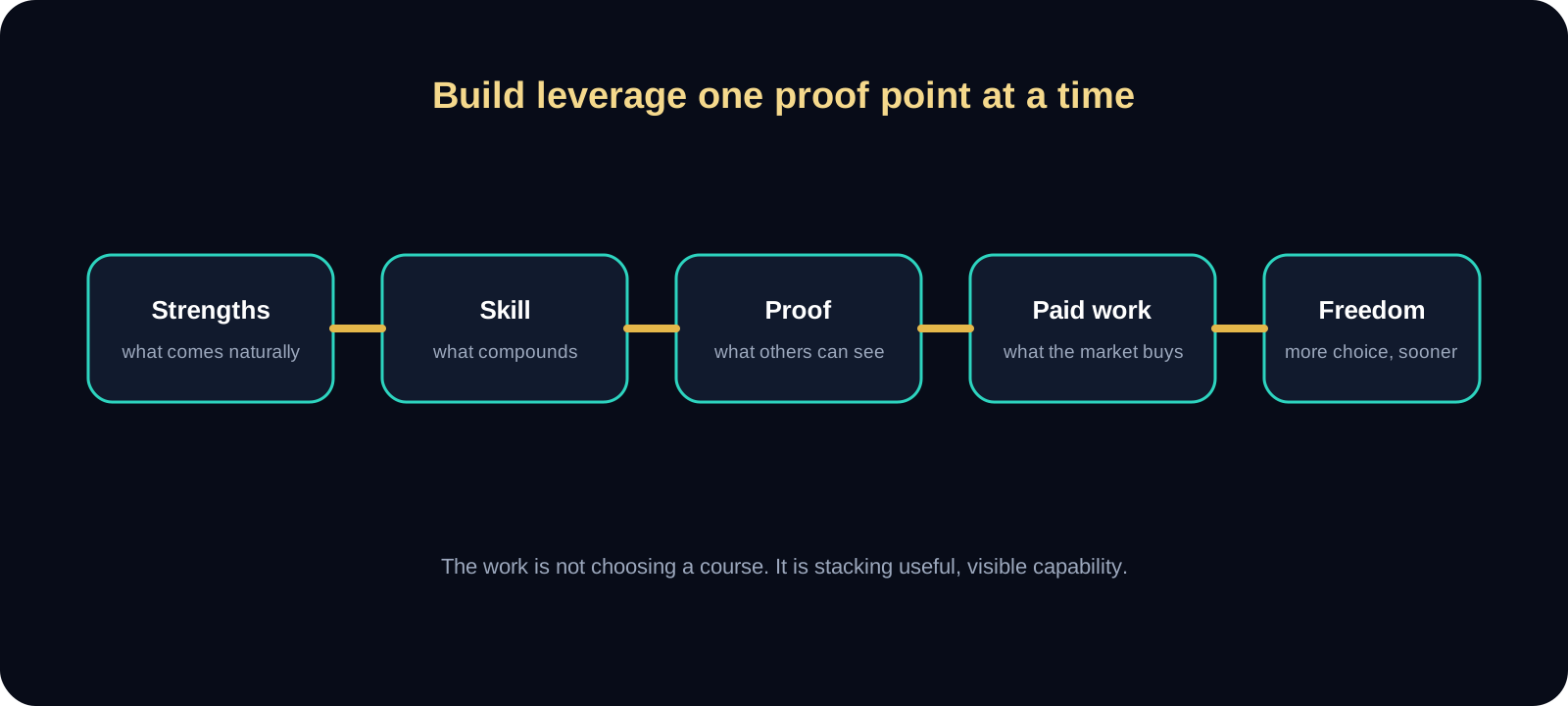
Skill portfolio chain from strengths to financial freedom
Strengths become skills, skills become visible proof, and proof leads to paid work and more freedom.
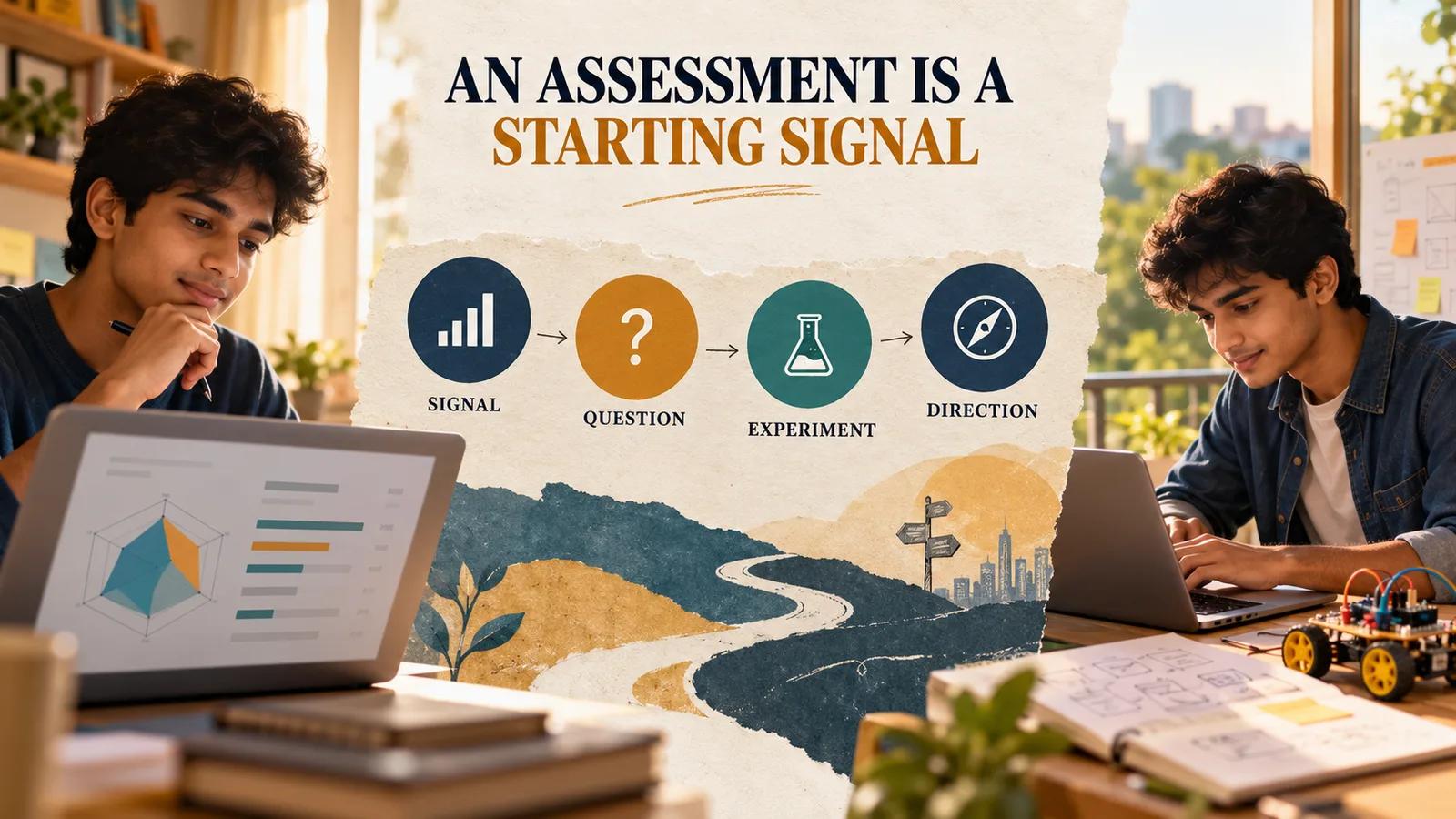
An assessment signal map showing how results become questions, experiments, and direction
Answer honestly

Rate each statement, then choose what you would do

There are no right answers on the statements, so think of your usual pattern, not your best day. In the situations, pick what you would really do, not what sounds best.

Which of these describes you best?

A first-year student, a placement-season MBA and a first-job fresher test business sense in very different ways, so your report changes its extra questions and advice to match.

It appears at the top of your result and in your PDF report. It stays on your device.
What is scored

Five areas of business sense this quiz checks

Business sense goes wrong in different places for different people. Some students can sell but lose money on every sale, some price well but never ask a customer anything, and some work hard but cannot deliver on time. Your lowest area is the best place to start.

Customers and selling

Finding out what people need and asking them to pay

High score: You talk to real customers before you build, listen for the problem behind the request, follow up politely and treat a no as information.

Low score: You plan or build first and talk to customers later, or asking for money feels so awkward that you lower the price or stay silent.

Pricing and profit

Knowing what one sale really leaves in your hand

High score: You work out what you keep from each sale after costs and your own time, and you set prices from numbers instead of from fear or copying.

Low score: You copy a rival’s price, cut it the moment someone hesitates, or count the full sale amount as profit without taking away costs and your hours.

Cash and costs

Keeping money coming in before it goes out

High score: You separate project money from personal money, track what you spend, know your monthly fixed costs and test an idea before you put savings into it.

Low score: You spend on stock, tools or ads before anyone has agreed to pay, and you cannot say how much a project earned once everything is counted.

Marketing and trust

Getting known and being believed

High score: You can say who you help and how in one sentence, show proof such as samples and customer words, and judge marketing by enquiries and sales, not by likes.

Low score: You promise more than you can show, post everywhere without knowing which post brings customers, or wait for people to find you.

Operations and teamwork

Delivering what you promised with other people

High score: You promise dates you can meet, write down who does what, tell people early when something slips and ask what is blocking a teammate before blaming them.

Low score: You promise dates by instinct, carry everything in your head, or let problems grow until the customer or the group finds out for you.

How to read your business skills result

The score is about judgement habits, not exam marks

There is no textbook answer to look up here. Each statement and each situation asks what you actually do, and the scenario choices are scored by how well they protect your customer, your cash and your time.

A student with a high exam score can still price badly, and a student with average marks can have strong business sense. A low area is a habit you have not practised yet, not a fixed weakness.

Where this quiz connects to turning a skill into income

Almost every route that turns a skill into money uses the same five habits: finding who needs it, pricing it, watching cash, earning trust and delivering.

Selling a skill as a service such as design, writing or spreadsheet work is a Scalable route when you keep adding proof, but the field is crowded and trust comes slowly. Tutoring or coaching is Scalable with a business layer, and reselling goods is Not so scalable because your hours and your stock limit it.

None of these routes promises income, and this quiz cannot say which one will suit you. It shows which habit to practise first, so that you can try a small version cheaply before you put in savings.

Test with real customers before you put in money

Your answers show how you see your own habits. Check them with one small real step, such as asking three people what they would pay for, selling one small item, or keeping a money record for two weeks.

Retake the quiz after you have worked on your lowest area for a while. A change in that area suggests the routine helps, and your real customers are the better proof.

Limits to keep in mind

  • This is a self-rating tool. It shows how you describe your own habits and choices, and it cannot replace honest feedback from a teacher, a mentor or a customer.
  • It is not a certificate, a business qualification or an official assessment, and it does not test syllabus knowledge or predict exam marks.
  • Scores come only from your own answers. They are never set against other students, so no score counts as a pass or a fail.
  • It does not predict whether a business will succeed or how much you will earn. It points to the habits that are worth practising first.
  • The rupee amounts in the situations are made-up examples for teaching, not real prices, costs or earnings. Real businesses differ by city, product and customer, so check prices, rules and costs for your own case.
  • This is general information, not financial advice. Before you borrow money, put in savings or sign anything, get the terms in writing and talk to a trusted adult or an accountant.
Common questions

Before you take the test

Is this business quiz for college students free?

Yes. You do not pay or register. The quiz takes about 8 minutes, shows your result as soon as you finish and lets you save it as a PDF.

Can BBA, BCom, MBA and management students take this business quiz?

Yes. It is a business quiz for BBA, BCom, MBA and management students, and engineering and arts students can take it too. You choose your stage before the result, such as early years of college, final year or MBA, running a side project, or a first job.

Are these business quiz questions for BBA students the same as exam questions?

No. They are not syllabus questions with one textbook answer. They are everyday situations about customers, prices, cash, trust and teamwork, and the score shows your judgement habits, not exam marks.

Is there a business quiz for commerce students that needs accounting knowledge?

No accounting knowledge is needed. Commerce and BCom students will recognise the ideas of profit, cost and cash, but every question is written in plain words with small examples.

Are the rupee amounts in the situations real prices?

No. Amounts such as Rs 250 for a phone cover or Rs 6,000 for a design project are made up to practise the thinking: count your costs, protect your cash and check what is left. Real prices and costs depend on your city, product and customers, so work out your own numbers.

How is the score worked out?

You rate each statement from 1 (not true) to 5 (very true), and a statement that describes a poor habit, such as giving a discount at the first doubt, is turned around so that agreeing with it lowers the score. Each situation gives 0 to 100 points, judged by how well your choice protects your customer, your cash and your time. An area score is the average of its answers, and your overall score is the average of the five areas.

What is a good score on a business skills quiz?

There is no pass mark. Your areas are compared with each other, not with other students, so the lowest one shows where a small habit will help most. Retake the quiz after you have tried the routine to see whether it moved.

Will this quiz tell me which business to start?

No. It looks at habits, not at ideas, so it cannot choose a business for you. For routes, selling a skill as a service is Scalable, tutoring or coaching is Scalable with a business layer, and reselling goods is Not so scalable, and the report suggests a small test for each before you spend money.

How can I improve my business skills after the quiz?

Start with your lowest area and take one small real step, such as talking to three customers or recording a project’s money for two weeks. Your report gives a 14-day routine of four steps for that area, and the idea feasibility calculator linked below lets you test your own numbers before you spend.

Free results are step one

Free assessment results are useful. Real career decisions need stronger guidance.

Start with the free test that fits your stage. When the decision gets serious, move to updated career guidance that turns those signals into better choices, stronger skills, and higher leverage.

Use free results to narrow the problem before you commit to a bigger decision.

Use guidance to avoid wasted years, wasted money, and low-value skill choices.

Use the right plan for your stage to turn the result into a practical next step.

Sessions are online across India. The stronger plan gets built inside the guidance service.

Career Guidance Pricing

Students

Student path

Student Career Guidance

Practical student career guidance before the wrong path wastes years, money, and future readiness.

Limited-time student offer
₹3000
₹250
for the first 1-on-1 session

A low-friction first step before the wrong path costs more time and money.

Online across India

Avoid

Wrong streams, outdated degrees, and low-value skills that waste years and money.

Move toward

Useful skills, future readiness, and a clearer next decision.

Working Professionals

1-on-1

Working Professional Career Guidance

For professionals who need clearer pivots, stronger compensation, and higher-leverage career moves.

Limited-time professional offer
₹5000
₹3000
for one 1-on-1 session

Book one sharp 1-on-1 before stagnation, weak positioning, or a bad pivot gets more expensive.

Online across India

Avoid

Salary ceilings, random upskilling, weak positioning, and pivots that waste time and money.

Move toward

More useful skills, sharper positioning, and clearer next moves.