Affordable career counselling: what "affordable" should actually buy you
Affordable career counselling is real here, but the word only means something next to a comparison. Weighed against a private coach's separate diagnostic fee, the cost of a wrong-fit degree or stalled pivot, or simply doing nothing, a Rs 250 student session or a Rs 3000 working-professional session is a small, visible outlay, not a vague "contact us" quote.
It is still a real cost, and cheap does not automatically mean worth it. The honest answer depends on what a wrong decision would cost you.
The real measure of "affordable" is not the number itself but what it moves you toward: a high-value skill portfolio and the decisions that unlock high income opportunities, not just a cheaper receipt.
Here's how that cost actually compares to the real alternatives, not just to itself.

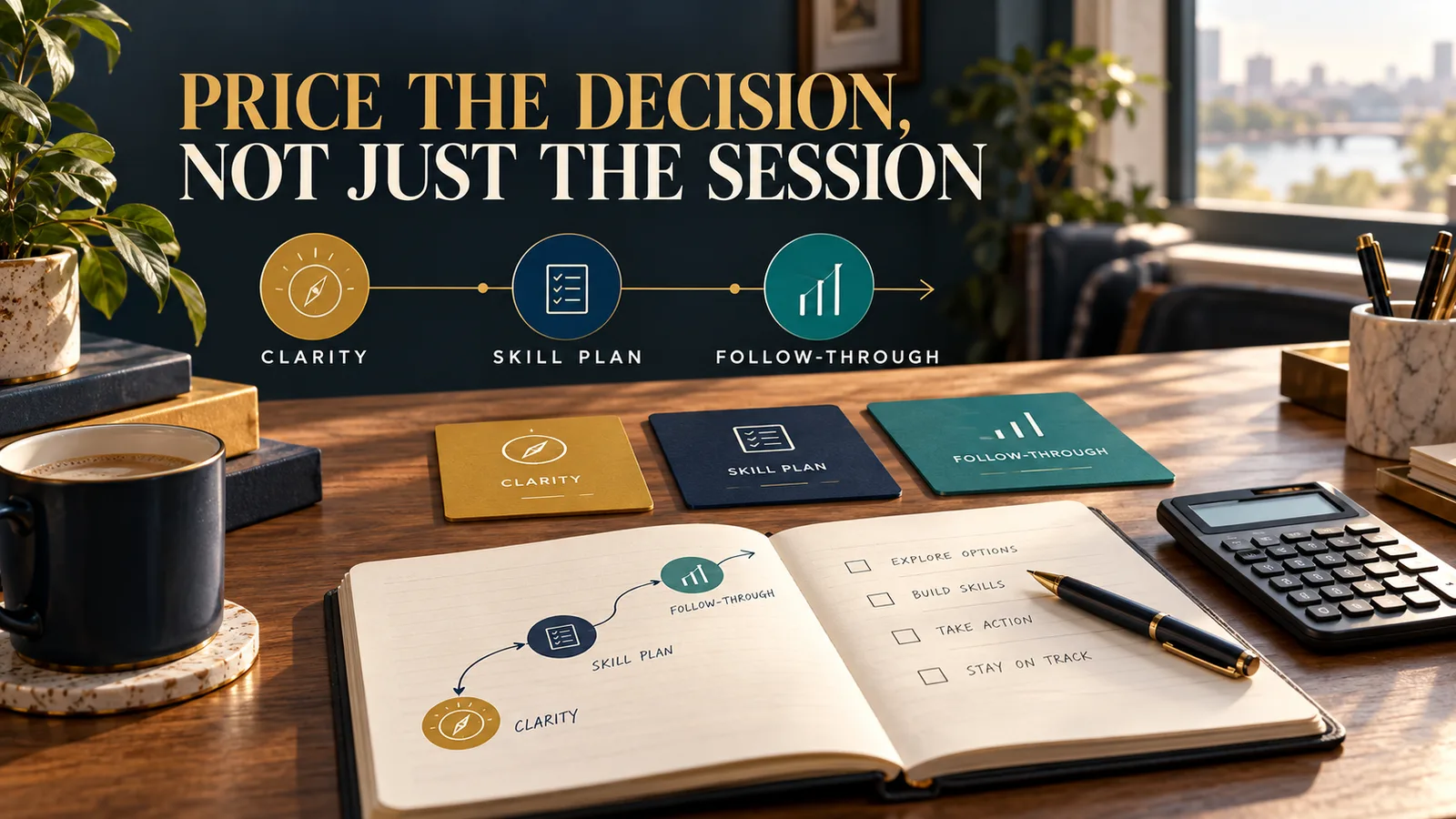
The honest short version
- "Affordable" is meaningless on its own. It only means something when weighed against a private coach's fees, the cost of a wrong decision, or doing nothing at all.
- A first 1-on-1 session is Rs 250 (limited-time price, down from Rs 3000) for students and Rs 3000 (limited-time price, down from Rs 5000) for working professionals, with no separate diagnostic fee added on top.
- Many private coaches and consultants charge a large fee just for a diagnostic session before any real guidance begins. Here, the session price is fixed and visible upfront.
- A low price is not the same as thin support. The price is a limited-time offer, not a signal about the quality of the session.
Affordable career counselling, compared to the real alternatives
A price only tells you something once you know what it is being measured against. Here are the two things people are usually actually comparing career counselling fees to, and how the comparison plays out honestly.
Many independent career coaches and consultants charge a large one-time fee, often in the thousands, for a diagnostic session before any real guidance even starts. That upfront cost is separate from whatever the actual coaching or counselling costs afterward, so the real total is usually higher than it first looks.
Here, there is no separate diagnostic fee just to find out whether paying for a session is worth it. A first 1-on-1 session runs Rs 250 (limited-time price, down from Rs 3000) for students and Rs 3000 (limited-time price, down from Rs 5000) for working professionals, with nothing added on top.
Skipping paid support entirely has a real cost too, it just does not show up on a receipt. A wrong-fit degree, a loan-funded course with a weak return, or a stalled career pivot can cost far more in wasted years and money than a single counselling session ever would.
Weighed against that kind of outcome, a Rs 250 or Rs 3000 session is a small outlay for a decision that is expensive, time-pressured, or hard to reverse. It is still a real cost, and it is not always the right call, which is the next comparison.
What the price is actually buying, compared to the alternative
Not every provider adds the same thing behind a similar-looking price. This is the difference that matters when you are judging whether a session is worth it.
Judging value by the lowest price on the page
Judging value by what the fee moves you toward: a clearer skill direction and income growth
A cheap quote that hides extra charges later
A fixed price shown upfront, before you commit time to a call
Generic advice that still leaves you unclear
High-leverage decision support around path, skill, and risk
Low-growth paths that delay real earning progress
Stronger skill choices aimed at achieving earlier financial freedom
Random upskilling that compounds slowly
Clearer skill direction tied to growth and income upside
Is a low price the same as low quality
A fair question when a number looks small: is the price low because the support is thin, or is it low because of how the offer is structured right now? Here, the Rs 250 and Rs 3000 session prices are limited-time prices, not a signal about the depth of the session.
The clearer signal is what is included at that price: a real 1-on-1 session on your specific situation, a fixed price you can see before you commit, and a clear route into continuing guidance across the year if you want it.
When paying is actually worth it, and when it is not yet
A paid session is worth it now if
- A wrong choice here (degree, course, pivot) would cost far more than the session itself.
- The decision is time-pressured or hard to reverse once made.
It is worth waiting on if
- The decision is small, early, or easily reversible.
- You are comparing options in the abstract rather than facing an actual choice right now.
Affordability is really a comparison between the price of the session and the cost of getting the decision wrong. When that gap is large, the fee is easy to justify. When the decision is still small or early, spending nothing yet is the more honest answer.
FAQs on affordable career counselling
Is affordable career counselling actually good, or is a low price a red flag?
Price and quality are not the same axis here. The reason a first session is priced at Rs 250 (limited-time price, down from Rs 3000) for students and Rs 3000 (limited-time price, down from Rs 5000) for working professionals is a limited-time price, not a signal of thinner support.
How does this compare to what a private career coach charges?
Many independent coaches and consultants charge a separate, often large, one-time fee for a diagnostic before any real coaching begins. Here, there is no separate diagnostic fee, and the paid session price is fixed and visible upfront, so you are not paying twice before getting a real answer.
Does a lower price mean less support after I pay?
No. The fee covers a real 1-on-1 session focused on your specific situation. For people who want ongoing support across a year rather than a single session, the continuous-guidance package (Rs 12000 (limited-time price, down from Rs 29000), includes the 1-on-1 and up to 24 small-group sessions across the year) exists as a separate, clearly priced option, not an upsell hidden behind the first session.
Is career counselling worth it for me specifically right now?
That depends on what a wrong decision would cost you. If the choice in front of you is expensive, time-pressured, or hard to reverse, a paid session tends to add more value than its price.
Do you guarantee results for the price you pay?
No ethical provider can guarantee a job or a specific income outcome, and this fee is not sold that way. What it buys is structured decision support around path, skill, and risk. The outcome still depends on the direction you choose and the effort you put in afterward.
Once you know which side of that comparison you are on
If a wrong decision would cost you more than the session, the guidance plans are the next step. Either way, affordable only earns the word if it moves you toward earlier financial freedom, not just a smaller invoice.
Career Guidance Plans
Student Career Guidance
Practical student career guidance before the wrong path wastes years, money, and future readiness.
A low-friction first step before the wrong path costs more time and money.
Online across India
Wrong streams, outdated degrees, and low-value skills that waste years and money.
Useful skills, future readiness, and a clearer next decision.
Includes the 1-on-1 and up to 24 small-group sessions across the year.
Real student growth comes from a series of better decisions. This path keeps skill choices, future readiness, and review points visible across the year.
Working Professional Career Guidance
For professionals who need clearer pivots, stronger compensation, and higher-leverage career moves.
Book one sharp 1-on-1 before stagnation, weak positioning, or a bad pivot gets more expensive.
Online across India
Salary ceilings, random upskilling, weak positioning, and pivots that waste time and money.
More useful skills, sharper positioning, and clearer next moves.
AI pressure, stagnation, career pivots, and deciding which next skill move can multiply leverage.